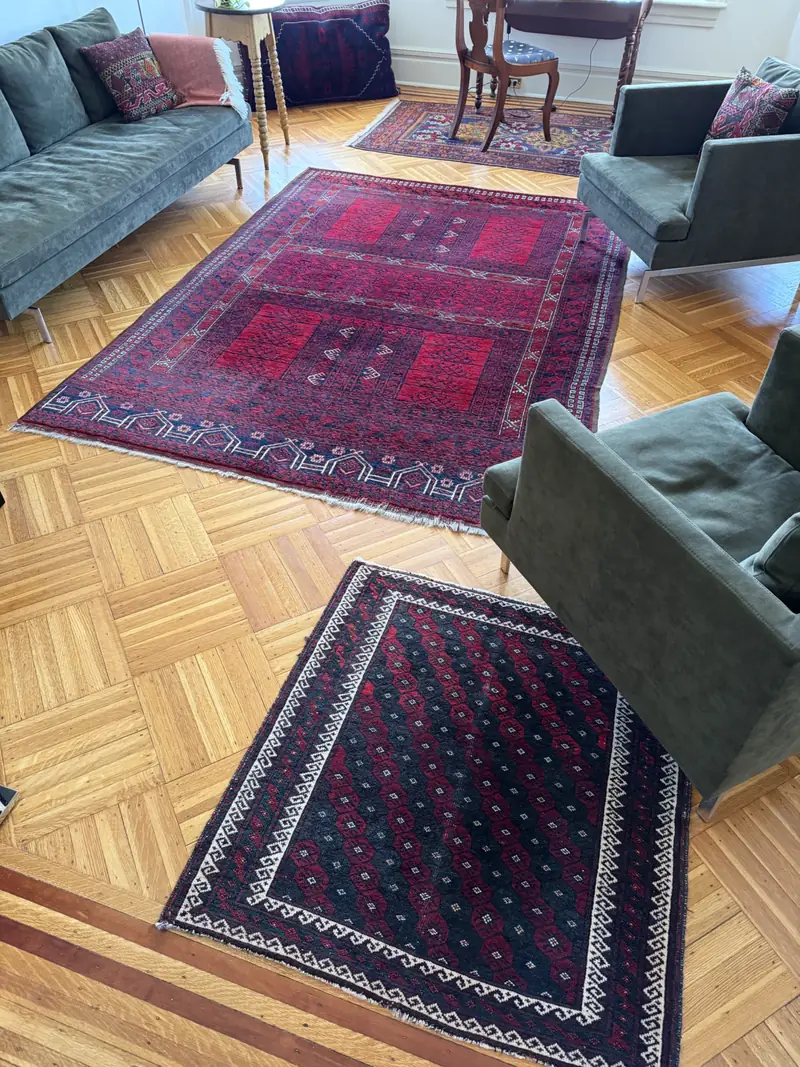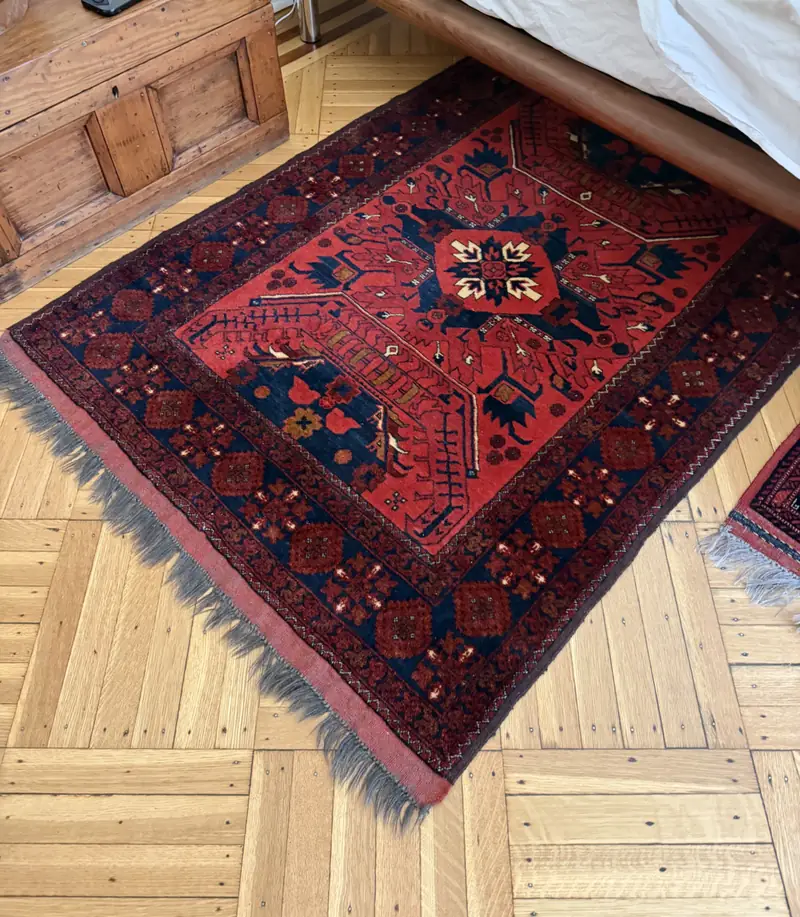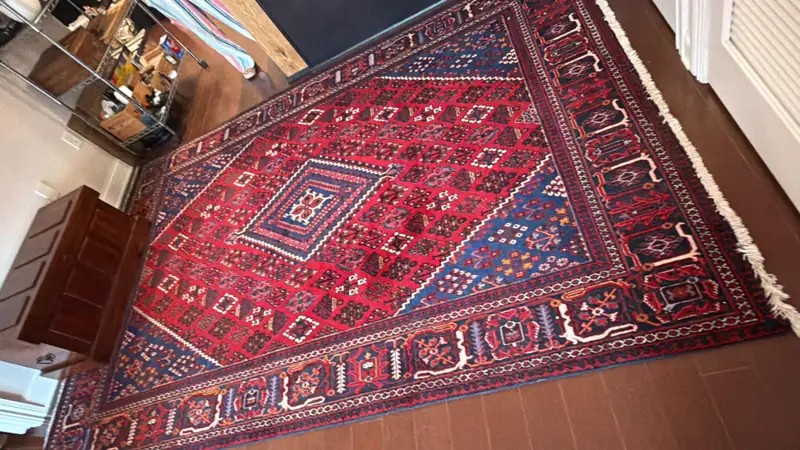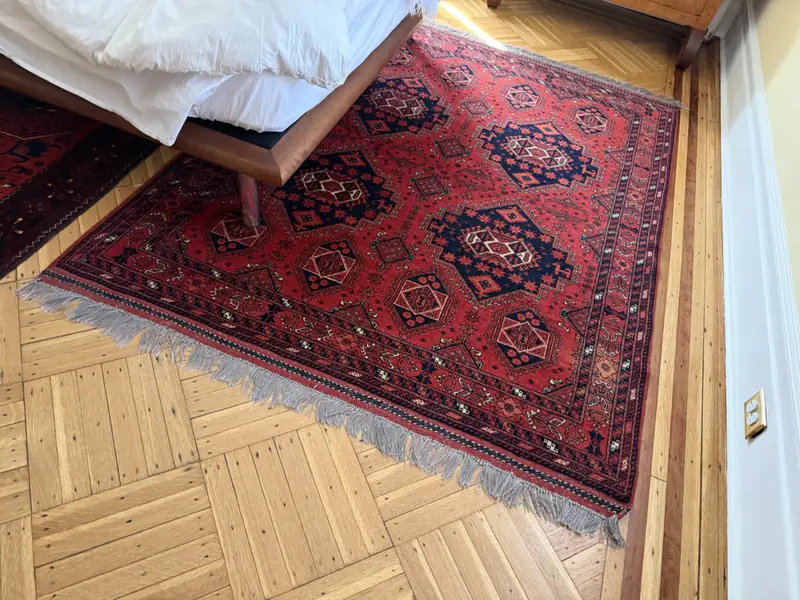
A rug pad matters because it stops the rug from shifting and rubbing against the floor, cushions the pile so fibers crush less under feet, and lifts the back of the rug off the fine grit that collects underneath. All three slow wear. The pad also changes how a rug cleans and how fast it dirties, which most owners never think about until they lift a rug and see what has been happening below it.
What happens under a rug with no pad
A rug laid straight on wood or tile moves a little with every step. Most of that movement is invisible, a millimeter here and there, but it adds up. The back of the rug slides against the floor, and any sand or grit that has filtered down through the pile gets ground between the foundation and the floor surface. On a hand knotted rug, the back is where the knots and the foundation threads live, so that grinding wears the structure itself, not the surface you see.
You can check for it. Lift a corner of an unpadded rug that has been down for a while and run your hand across the floor beneath. A gritty film, or fine fiber dust in the shape of the rug, means the back is being abraded. Turn the corner over and look at the knots. If they look flattened or fuzzy compared with an edge that rarely gets walked on, the rug has been wearing from below.
How a pad keeps a rug cleaner
A pad does three useful things for cleanliness.
First, it gives grit somewhere to go. Fine soil that sifts through the rug settles on or in the pad, away from the foundation, instead of staying trapped in a thin layer between rug and floor.
Second, it lets air move. A rug with a breathable pad below it dries faster after a spill, and is less likely to hold a damp layer underneath in humid weather. That matters in New York summers, when an unpadded rug on a cool floor can stay damp at the base longer than you would expect.
Third, a rug that stays flat and still is easier to vacuum. It does not bunch or travel under the vacuum head, so more of the suction goes into the pile instead of into chasing the rug across the room.
How padding adds life to a rug
Cushioning protects the pile. When a foot lands on a rug with a pad below it, some of the pressure goes into the pad instead of into the fibers. Pile that crushes less springs back better and shows traffic lanes later. This is most noticeable on wool rugs in hallways and living rooms, where the same path takes most of the steps.
A pad also keeps a rug from creasing and buckling. Ripples in a rug get stepped on and folded, and a fold that is walked on over time can crack a stiff or older foundation. Thin flatweaves like kilims gain the most here, because they have no pile to absorb the pressure.
Felt, rubber and combination pads compared
Pads differ in what they are made of, and the right one depends on the rug and the floor.
- Felt pads: dense, cushioning, and breathable. They protect pile well but grip the floor less, so they suit large rugs held in place by furniture.
- Natural rubber pads: thin and grippy. They stop small rugs and runners from sliding but add little cushion.
- Felt with a rubber backing: a common choice for hand knotted rugs on wood, combining cushion on top with grip below.
- PVC or vinyl pads: often the least expensive. Some can soften or discolor certain floor finishes over time, and they tend to break down into crumbs. If you have one, lift it and look at the floor.
If your floor has a fresh or soft finish, check with the finish maker before choosing any pad that sits in direct contact with it.
Sizing and fitting a pad
A pad should be slightly smaller than the rug on every side, so the edges of the rug taper down to the floor and do not create a raised lip that catches toes and vacuum heads. Trim it with sharp scissors so the edges are clean. For a runner, the pad should stop short of both ends so the fringe lies on the floor and is not lifted into the path of a door.
Do not stack two pads to add cushion. A rug that sits too high bounces with each step and moves more, which defeats part of the purpose.
When a pad needs replacing
Pads do not last forever. Lift a corner once or twice a year and check.
- It has flattened and no longer springs back when pressed.
- It crumbles, flakes, or leaves residue on the floor.
- It smells musty, or a pet accident has soaked through to it.
- It has stuck to the floor or left a pattern on the finish.
A pad that has absorbed pet urine should be replaced, not cleaned, because the odor stays in it and travels back into a freshly washed rug. When a rug goes out for handmade rug cleaning, that is a good moment to look at the pad and the floor beneath, vacuum the floor, and decide whether the pad goes back down or gets replaced before the clean rug returns.