
Rug Sanitizing
in NYC
Sanitizing that reduces bacteria, allergens and dust mites without harming fine fibers.
Arrange a pickup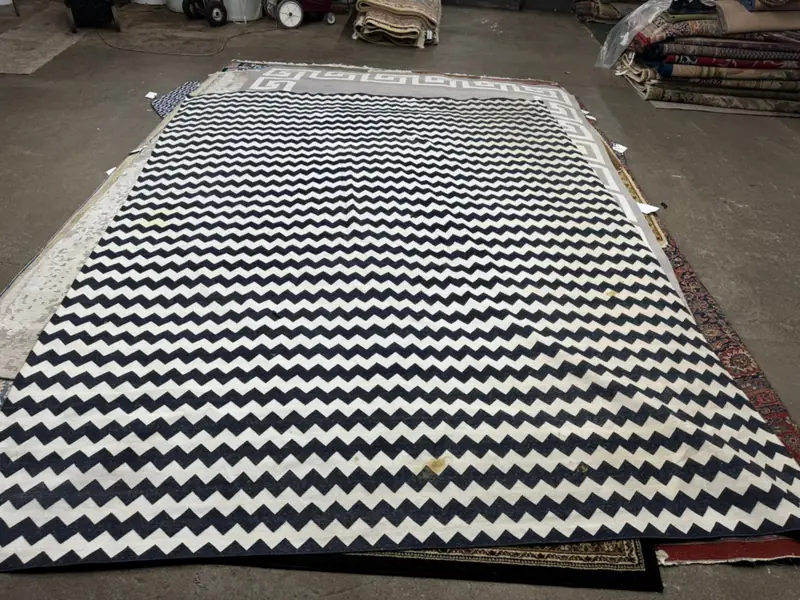 PHOTOGRAPHED BY OUR TEAM
How we sanitize
rugs.
Rug sanitizing treats the rug through its full depth, past the face of the pile. It combines an antimicrobial treatment with fiber-safe agents, allergen neutralization and, where mites have settled, a dust mite treatment. An ultraviolet pass is available as an add-on, and a verification step at the end measures what the treatment achieved.
Rugs harbor bacteria, dust mites, pollen, and allergens that affect indoor air quality and health. Our sanitizing service goes beyond surface cleaning to reduce microscopic contaminants embedded deep within the fibers. Using sanitizing agents chosen for the fiber, we aim for a hygienically clean rug for homes with children, pets and allergies, while protecting the rug's texture and color.
We discuss the condition, recommended treatment and expected outcome with you. The appropriate method is selected after inspection; not every treatment is suitable for every rug.
There are times when washing is not enough. A rug that has been soaked by a leak carries microbial growth in its foundation even after it looks and feels dry. A rug in a home where someone lives with allergies holds the dust mites and their residue deep in the pile. A rug that has been through an illness in the household, or years of a pet's traffic, holds what a vacuum and a normal wash leave behind. Sanitizing exists for those cases, and it is a treatment through the full depth of the piece rather than a pass over its face.
The work combines an antimicrobial treatment with agents chosen for the fiber, allergen neutralization through the pile, and a dust mite treatment where mites have settled, which is usually the bedroom more than the living room. Ultraviolet treatment is available as an additional pass. Drying is controlled from the first minute, because a rug that dries slowly can draw residue back up toward the face and undo the work. A verification step at the end measures what the treatment achieved.
The usual source of the trouble is the building rather than the rug. Steam radiators that weep at the valve, pipes that drip from above, floors mopped wet under a rug, storage against an exterior wall: any of these keeps a strip of the piece damp long enough for mildew. The first sign is usually an odor rising from the underside of the piece rather than from the room. Raise the rug so air can reach both faces, find and fix the source before the rug returns to the floor, and note for us when the wetting happened, because the treatment is scaled to how long the damp sat.
Mildew leaves its own traces where it grew: a stain, or a patch of weakened fiber. Those are identified before work begins, and what can and cannot change about them is said plainly. The treatment can be added to any cleaning visit, and between visits the useful habits are ordinary: empty the doormat before it becomes a dispenser, keep humidity down in damp rooms, and never lay a rug back over a floor that is still wet.
A careful
consideration.
- 01Antimicrobial deep treatment
- 02Allergen neutralization
- 03Dust mite treatment
- 04Fiber-safe sanitizing agents
- 05UV sanitization option
- 06Air quality improvement verification
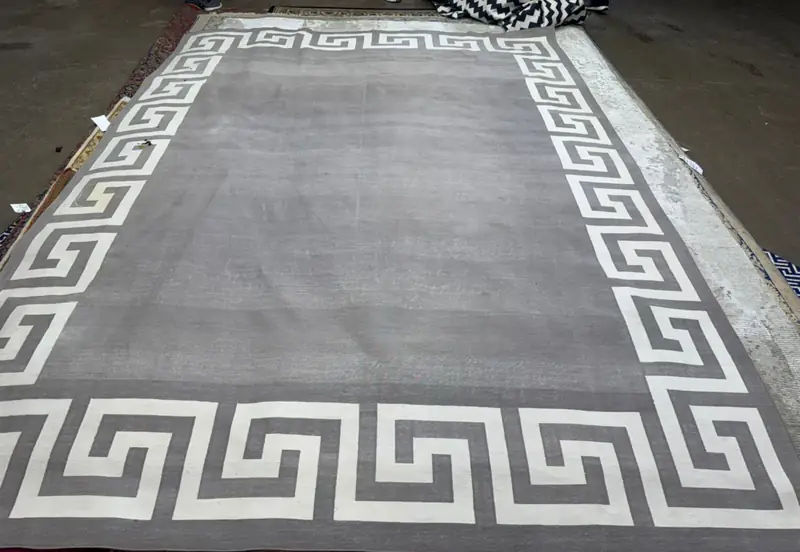
Time for a closer look?
- Allergy flare-ups near rug
- Dust mite presence
- Post-illness deep clean need
- Mold or mildew concern
- General hygiene maintenance
- Odor from bacterial growth
A considered
answer.
Good care starts with a clear conversation.
Ask us about your rugWhen is sanitizing worth adding to a rug cleaning?
Consider it after a leak has soaked a rug, in a home with allergies, after an illness in the household, or after years of pet traffic. In those cases washing alone can leave contamination deep in the foundation. Sanitizing can be added to any cleaning visit.
Does sanitizing harm the color or texture of a rug?
The agents are chosen for the fiber, and the aim is a hygienically clean rug that keeps its texture and color. We check the fiber and the dyes at assessment before anything is applied, so a delicate rug gets a treatment suited to it.
Why does my rug smell musty from underneath?
Odor rising from the underside often points to damp in the building: weeping radiators, dripping pipes, floors mopped wet under the rug, or storage against an exterior wall. Raise the rug so air reaches both faces and fix the source first. Tell us when the wetting happened.
How does pickup and delivery work?
We collect the rug at your door, clean it with specialist care and bring it back to your door. Pickup and return are free in all five boroughs, Westchester, Long Island and New Jersey. Tell us about your rug and your building, and we confirm the day, the time and how we reach your door with you before we come.
Can you clean silk, antique and hand-knotted rugs?
Yes. We assess the fiber, construction, dyes and existing condition before choosing a cleaning method. Delicate silk, antique and handmade pieces receive an approach suited to their individual needs.
How much will my rug cleaning cost?
The size, material, condition and work required determine the estimate. Speak with us about your piece; the final scope and price are confirmed after assessment, before work begins.
Can every stain be removed?
Results depend on the fiber, dye, stain and any previous treatment. We assess what can be safely improved and discuss limitations with you. Permanent dye damage or old staining may not be fully reversible.
Do I need to know what my rug is made of?
No. If you are unsure of the material or origin, our team can help identify it during assessment and explain the most appropriate care.
Let's care for
something remarkable.
A favorite piece. A family heirloom.
A room that feels like you again.