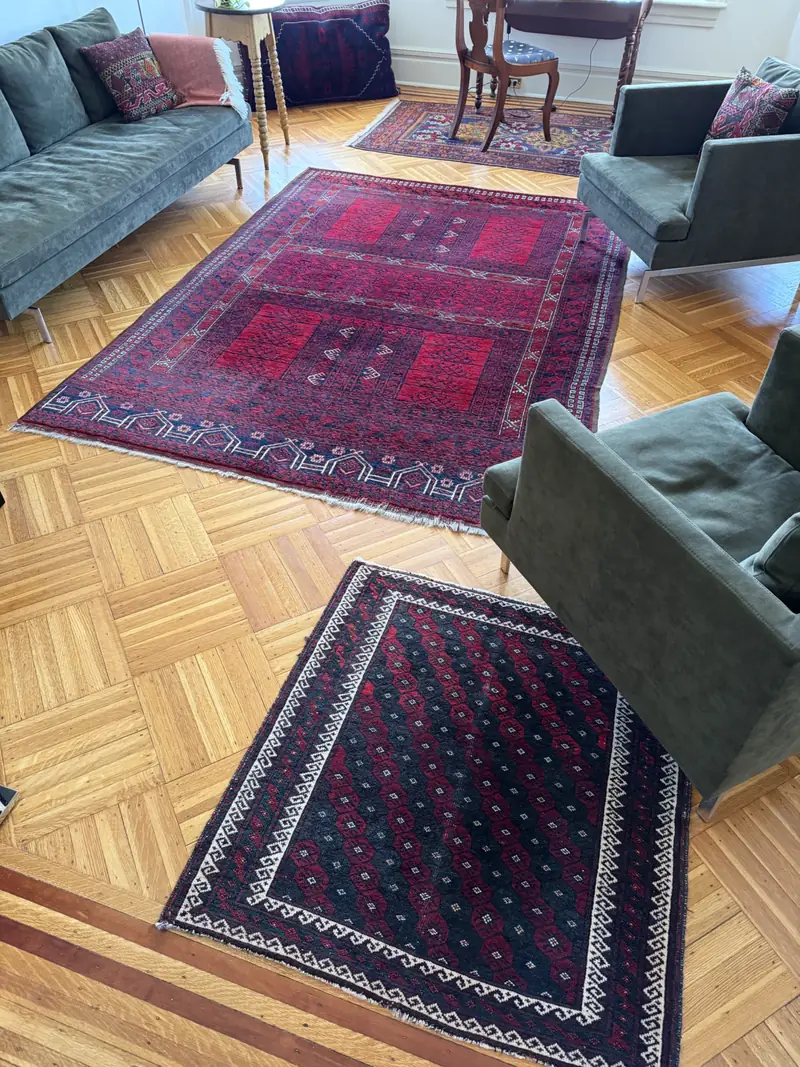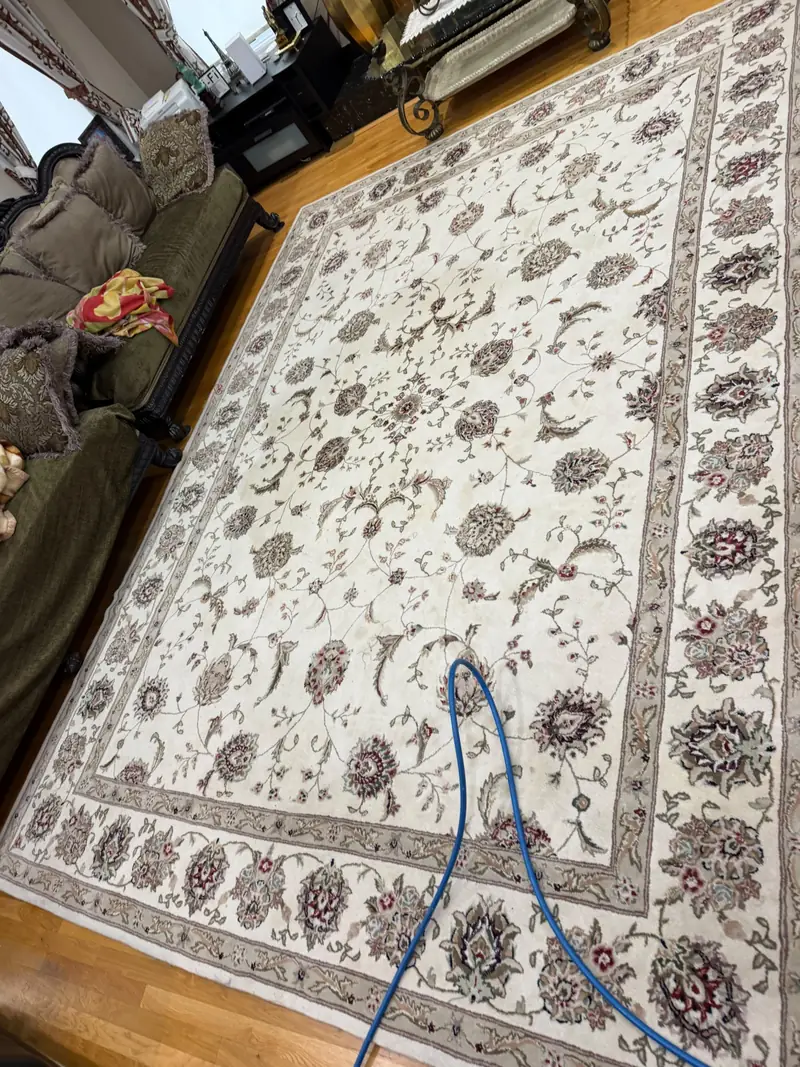
To remove a pet stain from an area rug without damaging it, blot up as much as you can right away, rinse the spot lightly with cool water, blot again until the cloth comes up clean, and dry it fast. Skip ammonia, bleach and hot water, test any product in a hidden corner first, and stop the moment color shows on your cloth. Fresh accidents respond well to this. Old ones are a different job, covered further down.
The first few minutes after an accident
Speed matters more than any product. Urine starts soaking past the pile and into the foundation almost immediately, and on a rug without a moisture barrier it reaches the pad and the floor below soon after. Everything you can lift before it spreads is liquid you will not have to rinse out later.
Grab a stack of white paper towels or plain white cloths. Colored or printed towels can transfer dye onto a wet rug, so use white. Lay a thick fold over the spot and press down hard with your palm or stand on it. Swap to a dry section and repeat until almost nothing comes up.
A careful method for fresh urine
- Blot from the outer edge of the wet area toward the center, so you do not push the urine into clean pile.
- Lift a corner of the rug if you can and blot from the back as well. Put a towel on the floor underneath while you work.
- Dampen a fresh white cloth with cool water. Press it onto the spot, then blot dry with another cloth. Repeat a few times. Do not pour water onto the rug.
- If a smell remains once the spot is dry, an enzyme cleaner made for pet urine can help on a wool rug, after you test it. Apply only to the stained area and do not soak it.
- Prop the rug so air reaches both sides, or set a fan on low across it. Keep it out of direct sun and away from a radiator while it dries.
Before step four, put a drop of the product on a hidden corner, wait a few minutes, and press a white cloth to it. Any color on the cloth means stop. Silk is a protein fiber, and so is wool, and some enzyme products work by breaking down protein. Use them with care on wool, and leave silk and antique rugs to a professional.
Solids and vomit
Let solids firm up slightly if they are soft, then lift them off with a dull edge, like a spoon or a plastic card, scooping toward the center. Do not wipe or smear. Vomit is acidic and can carry stomach dyes and food coloring, so after lifting the bulk, blot with a cool damp cloth and dry well. If the pile looks discolored once dry, do not keep treating it. Food dyes and stomach acid can set into wool, and repeated home attempts often enlarge the mark.
What old and repeat stains need
Urine changes as it sits. Fresh urine is usually mildly acidic, and as bacteria break down the urea over time, the spot becomes more alkaline and releases ammonia, which is where the sharp smell comes from. On wool, which is dyed with acid dyes, that alkaline residue can loosen dye and leave a pale or yellow mark. That color change is damage to the dye, and cleaning cannot always reverse it.
Repeat accidents in the same spot are common because the smell tells the animal the place is already marked. Humane society guidance warns against cleaners with a strong smell, ammonia and vinegar especially, because a strong chemical odor can encourage a pet to mark the same area again. Removing the residue fully, from the pile, the foundation and the pad, is what breaks the cycle.
Common mistakes that damage rugs
- Rubbing or scrubbing, which pushes urine deeper and frays wool and silk fibers.
- Hot water or a steam cleaner, which can set protein stains and cause dyes to bleed. Never use steam or a rental machine on a hand knotted, silk or antique rug.
- Bleach or oxygen bleach, which strips color from natural fibers.
- Soaking the spot, which spreads urine to a larger area and can leave a brown ring as it dries.
- Covering the smell with scented sprays, which leaves the source in place.
How to find spots you cannot see
Urine that has dried often has no visible stain, especially on a busy pattern. In a dark room, an inexpensive ultraviolet flashlight will usually make old urine glow. Outline each spot with a piece of chalk or a strip of painter's tape so you know where to work. Check the back of the rug too, and the pad. After cleaning and drying, scan again. If a spot still glows, residue remains.
When the smell is in the foundation or the pad, or when the spots are many, a home method reaches the surface and leaves the source. Professional pet stain and odor removal starts by checking the fiber and dyes, then treats the urine where it actually sits, through the full depth of the rug. A pad that has soaked up urine usually needs replacing rather than cleaning.