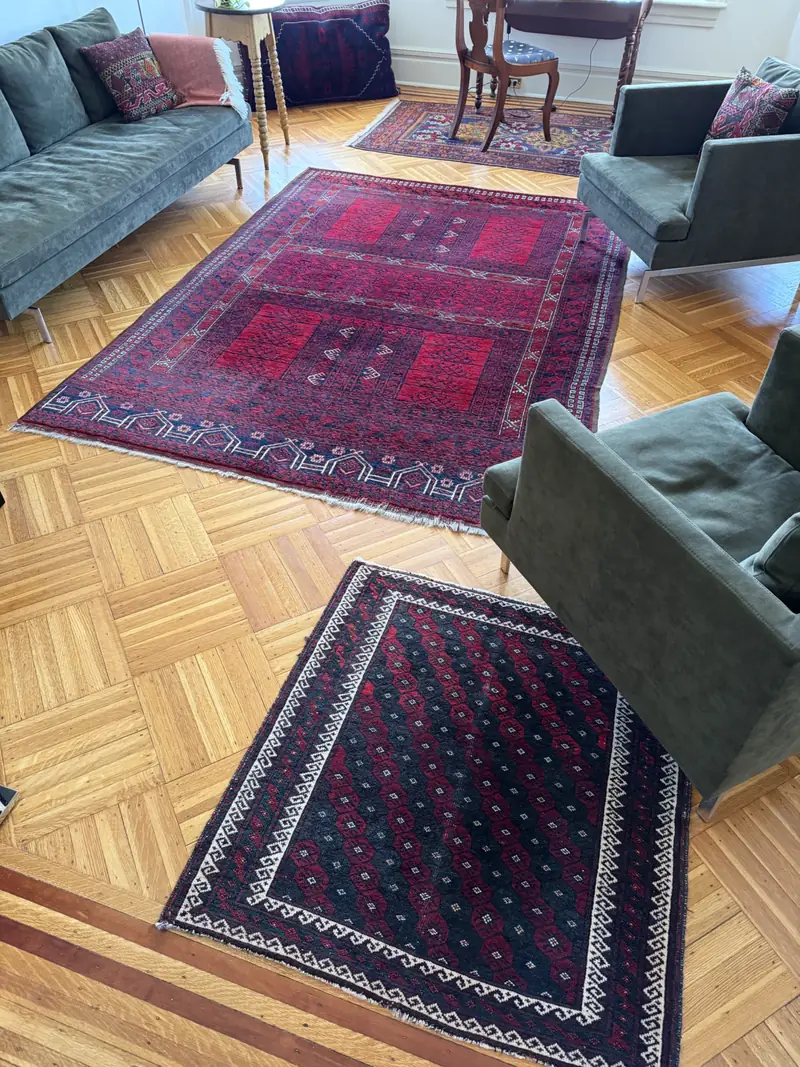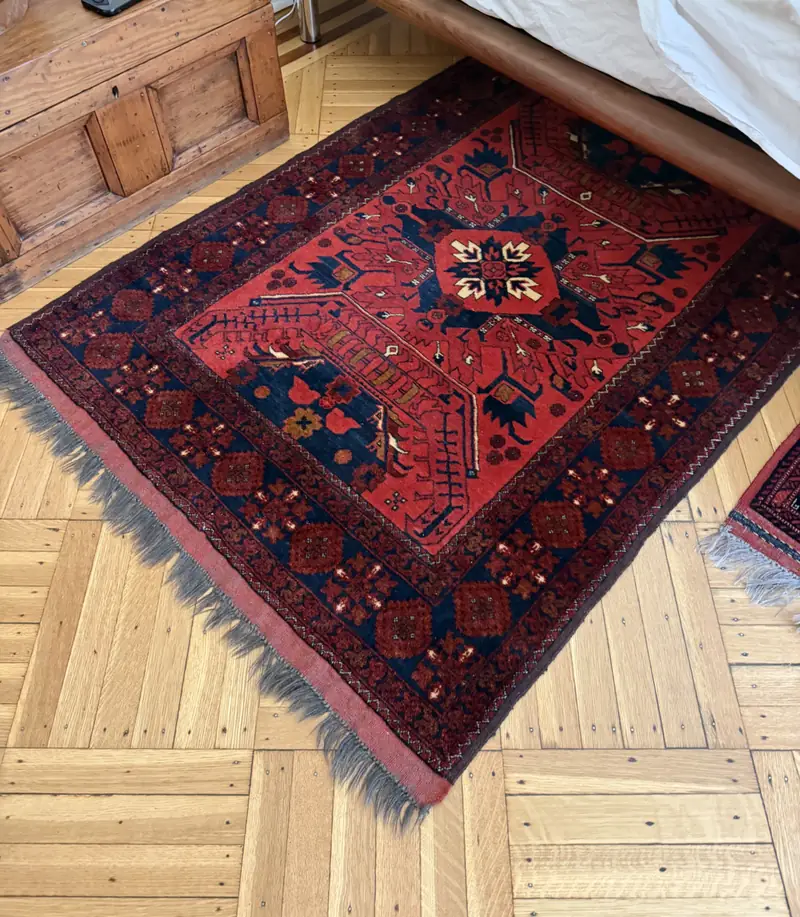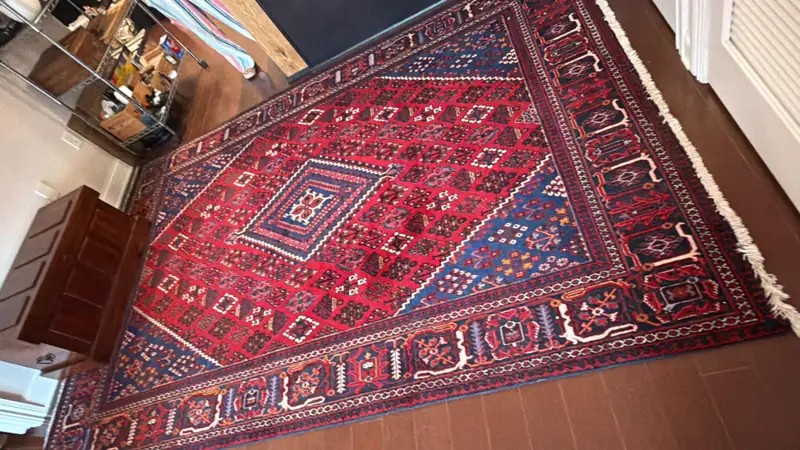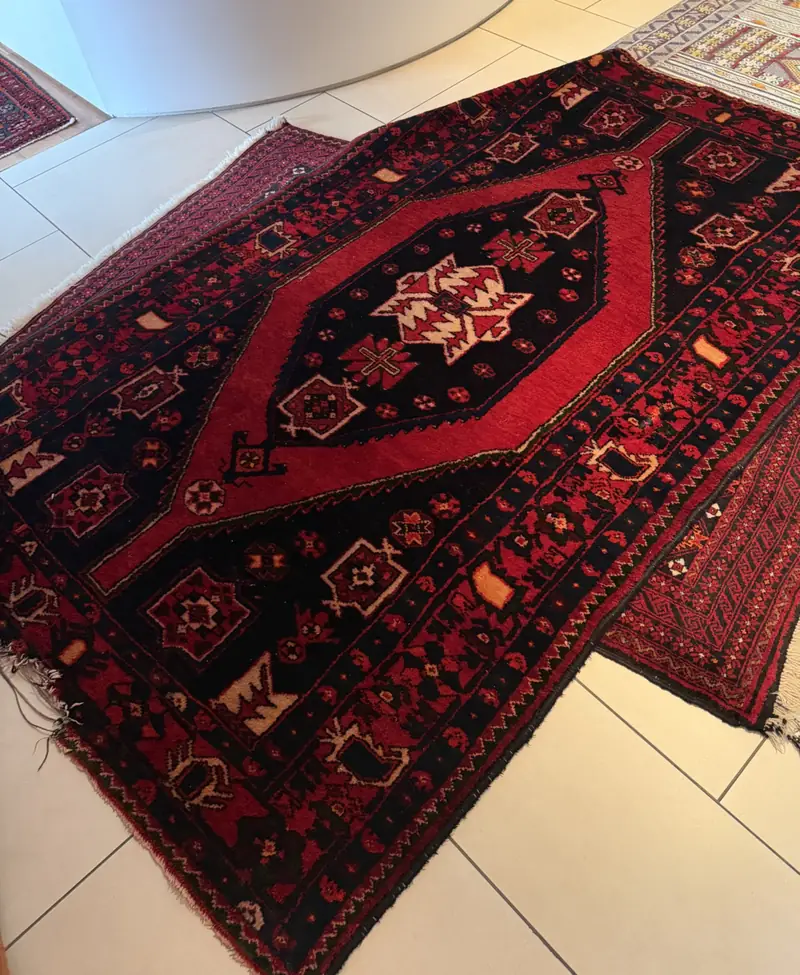
Full submersion is the deeper clean for a sturdy wool Oriental rug, because water reaches every layer of pile and foundation at once and carries soil out of all of them. Hand-washing, done section by section with controlled amounts of water, is the safer choice for silk, unstable dyes and fragile antiques. In practice the two often overlap, and the right mix depends on what an assessment finds in the specific rug.
What each method involves
Both methods begin the same way, with the removal of dry soil. A hand-knotted rug can hold a surprising amount of grit at the base of its pile, and washing a rug before that grit is out turns it into mud inside the foundation. Dusting by vibration or beating on the back, followed by vacuuming, comes first in either case.
In a full submersion wash, the rug is laid in a shallow bath or wash pit and flooded with water and a fiber-appropriate detergent. The water passes through the pile and the foundation from both sides. The pile is worked with brushes or squeegees in the direction of the nap to loosen soil, then the rug is rinsed repeatedly in clean water until no soap remains. Excess water is extracted before drying.
Hand-washing keeps the rug out of the bath. The cleaner works across the surface one section at a time, applying a measured amount of detergent and water, agitating gently with a soft brush or by hand, and rinsing and extracting that section before moving to the next. The foundation gets wet, but far less water passes through it at any moment.
How the two compare on soil, dye and fiber stress
Neither method is better in every respect. They trade depth against control.
- Soil removal. Submersion wins. Water flowing through the whole rug carries out soil trapped in the knots and the foundation, which surface work cannot reach as thoroughly.
- Odor. Submersion again, especially for urine that has reached the foundation, because the flushing goes all the way through.
- Residue. Submersion rinses more completely, which helps keep the rug from resoiling fast.
- Dye control. Hand-washing wins. A small area of a doubtful color can be cleaned, rinsed and dried before it has a chance to migrate.
- Strain on weak foundations. Hand-washing. A soaked rug is heavy, and that weight pulls on any warp or weft that has lost its strength.
- Fiber stress on silk. Hand-washing, because silk is weaker wet and the less time it spends saturated, the better.
Rugs that suit full submersion
Most hand-knotted wool Oriental rugs in good structural condition, with dyes that pass testing, are candidates for a full wash. That covers a large share of Persian, Turkish, Afghan, Indian and Caucasian rugs made with wool pile on a cotton or wool foundation. It is also the approach the Oriental rug cleaning service describes: full immersion with hand work on the pile, followed by controlled drying.
Signs that a wool rug can take submersion include a foundation that flexes quietly when folded, no color transfer in dye tests, and no old repairs that might loosen. Rugs with heavy soil, pet urine or a musty smell benefit most.
Rugs that call for hand-washing
Some rugs should not go in the bath at all, or only after careful thought:
- Pure silk rugs and silk-on-silk pieces, which are cleaned with low-moisture hand work.
- Wool rugs with silk highlights, where the silk areas need separate handling.
- Rugs with reds or blues that bled in testing.
- Antique rugs with brittle foundations, dry rot or extensive wear.
- Rugs with painted or inked-in areas that would run.
- Viscose or art silk rugs, which mat and distort when wet.
For these, hand-washing lets the cleaner stop, look, and adjust the moment anything changes.
How the choice gets made for a given rug
The decision is not made by rug type alone. Two Persian rugs from the same region can need different treatment if one has a sound foundation and the other has spent years in a damp basement. The assessment looks at fiber, construction, each dye and the condition of the foundation, and the method is matched to those findings.
Often the answer is a hybrid. A sturdy wool rug with one doubtful red might be submerged with cool water and a faster rinse, with the red areas watched closely. An antique with strong wool but a few weak spots might be hand-washed overall, with extra support under the weak areas. The goal is the deepest clean the rug can safely take.
Questions owners ask about wet cleaning
Will submersion shrink my rug?
Wool can shrink if it meets hot water and heavy agitation, and cotton foundations can draw in if they dry slowly or unevenly. Controlled water temperature, gentle work on the pile and fast, even drying keep that risk low on a sound rug.
Can I hand-wash an Oriental rug at home?
A small spot, yes, using cool water, blotting and a test on a hidden corner first. Washing a whole rug at home is risky, because drying a soaked hand-knotted rug evenly is hard without proper equipment, and slow drying causes browning and odor.
Is steam cleaning a third option?
Not for hand-knotted wool or silk. Heat can set stains, shrink wool and move dyes, and steam machines leave water in the foundation they cannot fully extract.