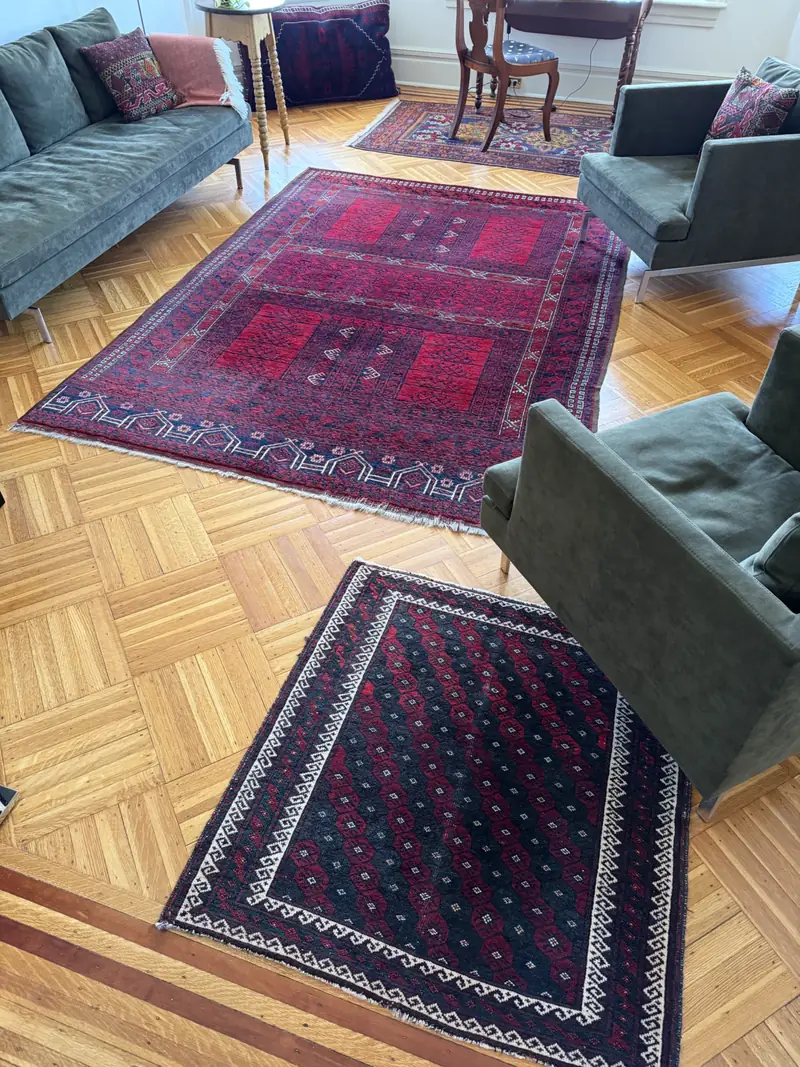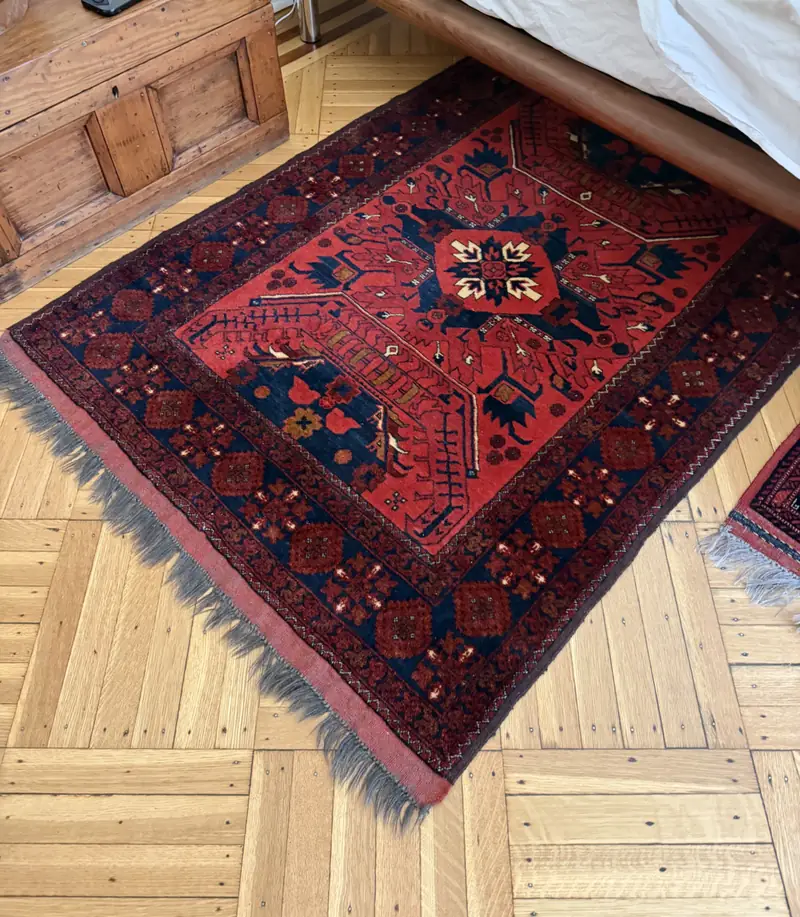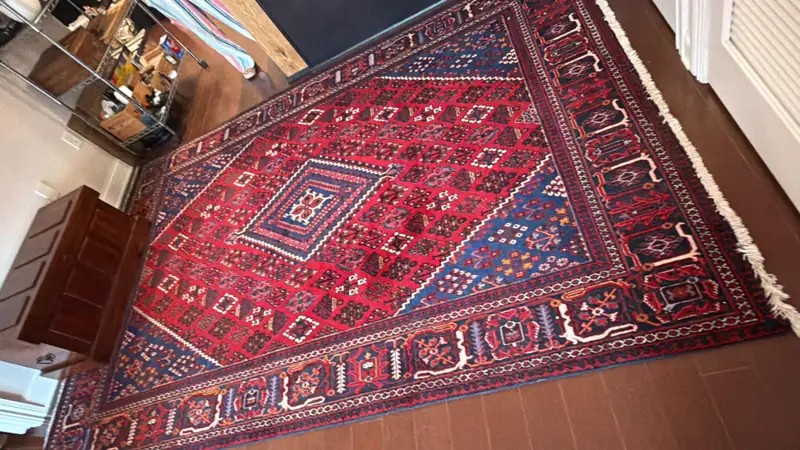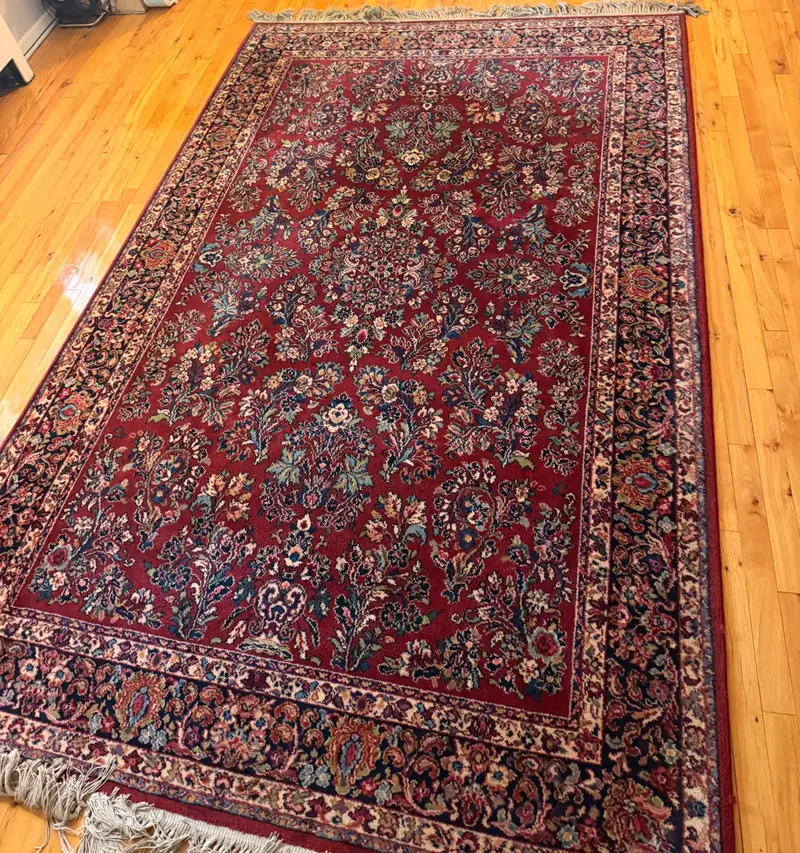
Cleaning alone is not enough when the damage is structural: missing pile, holes, rotten or broken foundation threads, unraveling ends or sides, and color that has already run or faded. Washing removes soil, odor and many stains, but it cannot put back fiber that is gone. Those problems belong to a rug restorer, a separate specialist who reknots, reweaves and secures the rug's structure.
What a wash can change, and what it cannot
It helps to separate the two kinds of problem before deciding anything.
A good cleaning can improve:
- Embedded grit and dust that dull the colors
- Odors from pets, smoke or damp storage
- Many spills and stains, depending on the fiber, the dye and how the stain was treated before
- Moth larvae, eggs and debris in the pile
- Discolored or dusty fringe
A cleaning cannot fix:
- Pile that moths, wear or a chair leg have removed down to the knots
- Holes, tears or splits in the foundation
- Warps that have rotted from long contact with moisture
- Ends where the knots are coming loose past the fringe
- Sides where the overcast binding has worn through
- Dye that has bled into neighboring colors and set, or faded from light
When the second list describes your rug, the question is not whether to clean but in what order to clean and repair.
Six signs a rug needs a repair specialist
Bare patches in the pile
Low spots where you can see the knots or the foundation threads usually mean moth feeding or heavy wear. Cleaning will make the area look cleaner, and also more obvious. A restorer can reknot lost pile with matched wool.
Holes and splits
A hole opens a little more each time the rug is walked on, rolled or lifted. The foundation needs to be rebuilt or at least stabilized before the area grows.
A crunchy or cracking foundation
Fold a corner back gently. If you hear cracking or the rug feels stiff and brittle in one area, the cotton foundation may have dry rot from a past leak, a damp floor or a potted plant that sat on the rug. Dry rot does not show from the front. A rug in this state should be assessed before it goes into water, because the weak area can split under the weight of a wet rug.
Unraveling ends
The fringe on a hand-knotted rug is the warp itself, and just inside it is a band of weaving or knotting that holds the last rows of knots in place. Once that band wears away, knots start to fall out row by row. Securing the ends early stops the loss.
Worn side cords
The sides are wrapped in yarn, called overcasting, that protects the outer warps. When it wears through, the edge can start to fray and curl. Rewrapping is a straightforward repair if done before the outer warps break.
Curling, ripples and crooked shape
A rug that will not lie flat, ripples in one area or has drawn out of square may have tension problems in the foundation, uneven past shrinkage or a weak repair. Some mild cases relax with proper cleaning and drying, and some need blocking or structural work. An honest assessment says which.
Clean first or repair first?
Most rugs are cleaned before repair, for practical reasons. A restorer matches new wool to the existing colors, and the true colors only show once the soil is gone. A clean rug is also easier to work on and does not grind grit into fresh repairs.
The exception is a rug too fragile to survive a wash as it is. A large hole, a split foundation or an area of dry rot can tear under the weight of water. In those cases a restorer may stabilize the weak area first, so it holds together through cleaning, and complete the finer repair work afterward.
Protecting a damaged rug until it can be repaired
Damage spreads with use, so a few habits buy time:
- Move the rug out of foot traffic, or at least keep chairs and furniture off the damaged area.
- Vacuum gently with suction only and keep the vacuum away from loose ends and holes.
- Do not pull loose threads. Trim nothing until a restorer has seen it.
- Roll the rug, never fold it, if it has to be moved or put away.
- Keep it dry and out of storage areas where moths can work undisturbed.
If moths caused the damage, cleaning removes larvae and eggs and a moth treatment can then help protect the remaining wool, which keeps the repair from being undone by the next generation of larvae. Worn or dirty ends that are still intact respond well to fringe cleaning, which is often enough when the knot band is sound.
Questions to ask a restorer
Before a repair begins, it is reasonable to ask:
- Will the repair be reknotted with matching wool, or patched and painted?
- Will the work be visible from the front, and from the back?
- Can the original fringe and ends be kept, or will they be rebuilt?
- What should be cleaned before the work, and what after?
Painting worn areas with dye or markers is a common shortcut. It can look acceptable at first, then bleed the next time the rug gets wet, so a real repair is worth asking for by name.