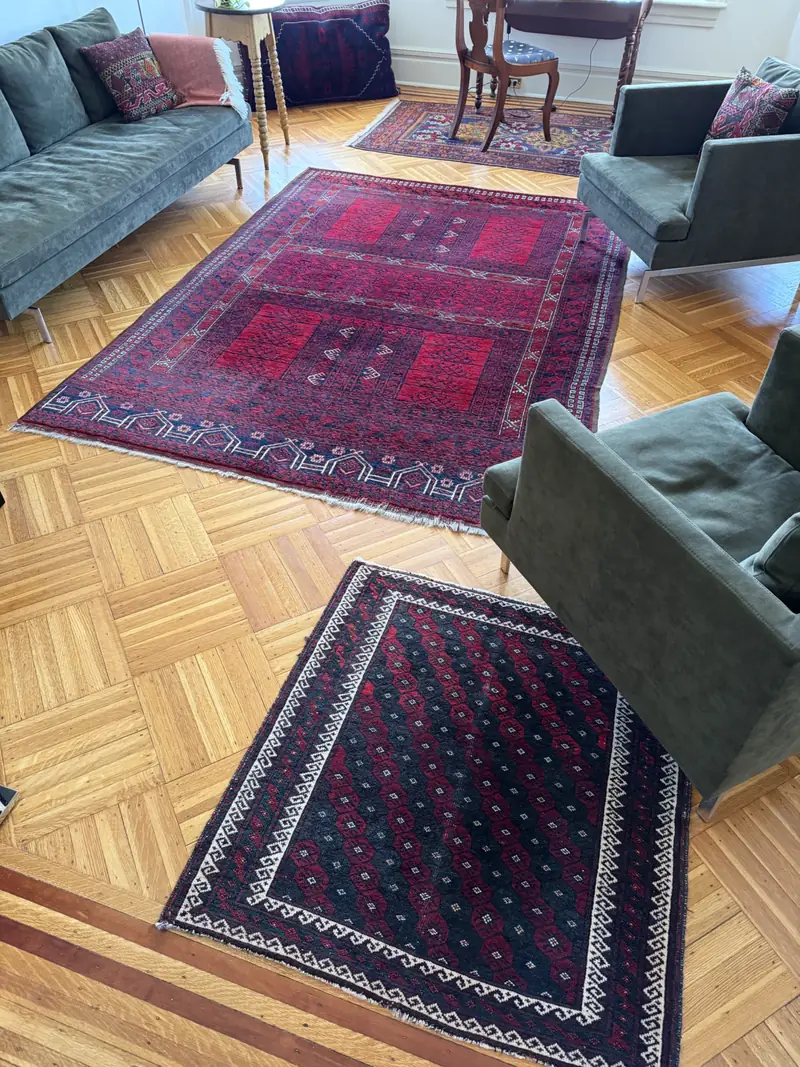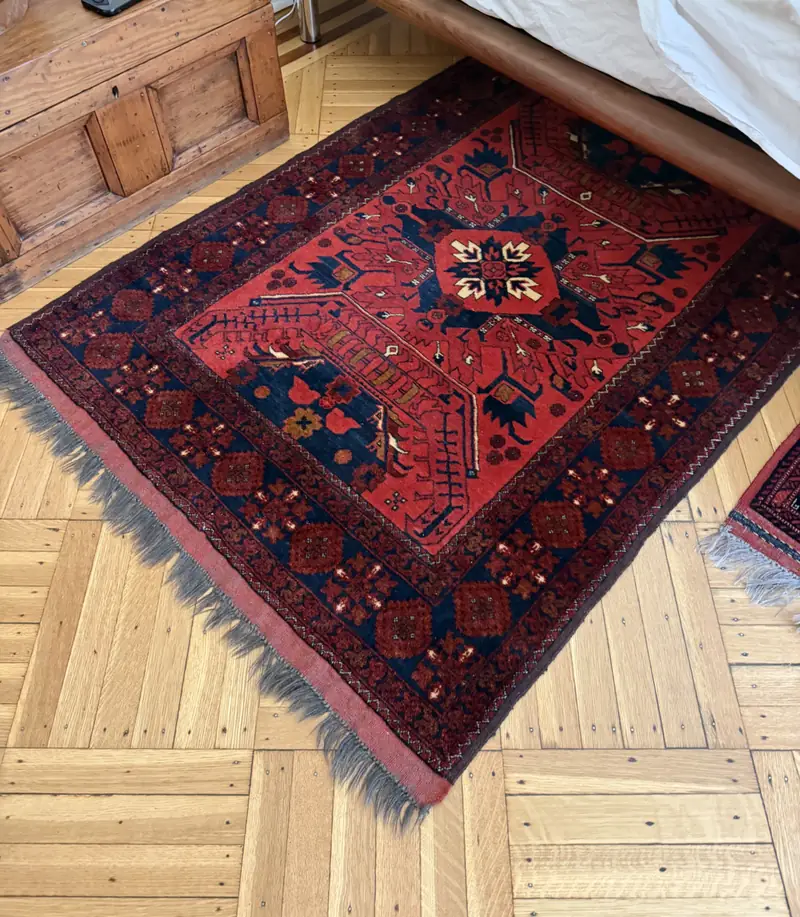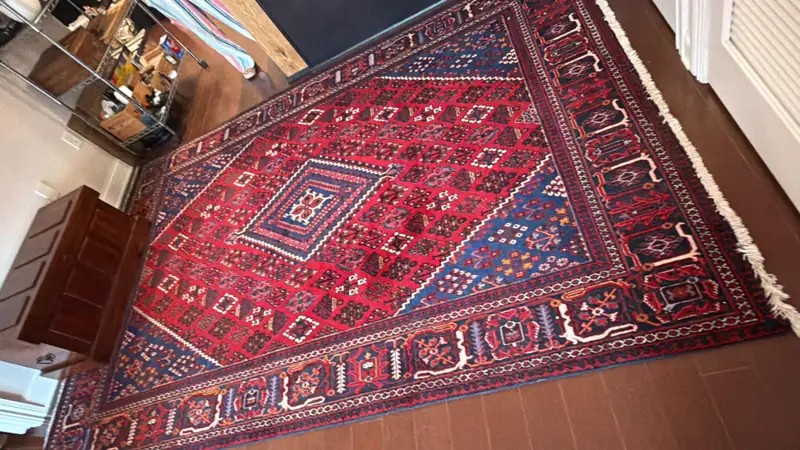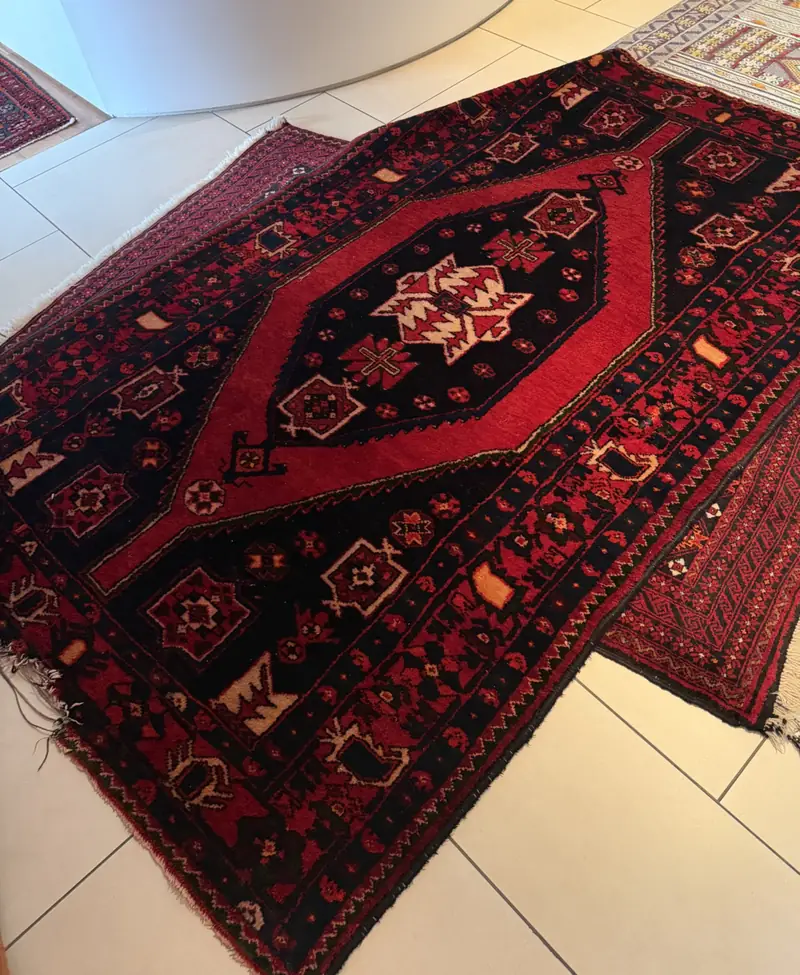
An Oriental rug should be professionally cleaned before it goes into storage, then rolled pile out around a sturdy tube, wrapped in breathable cotton or a similar fabric, and kept in a dry, steady room off the floor. Plastic, folding, attics and basements are the four things to avoid. Once it is stored, unroll it and look it over a couple of times a year. Most of the damage people find on stored rugs, moth holes, mildew and creases, comes from skipping one of those steps.
Why the cleaning comes first
A rug that looks clean on the floor still holds soil at the base of the pile: fine grit, skin flakes, crumbs, and the oils from bare feet. On a rug in daily use, that matters less, because footsteps, light and vacuuming disturb anything trying to live in it. In storage, nothing disturbs it.
Clothes moth larvae feed on wool and silk, and they thrive in dark, undisturbed places where animal fiber sits for a long time. Maine's state pest guidance notes that stored materials are the most likely to be infested, and that a lot of damage can happen before anyone notices. Soil and food residue in the pile make a stored rug more attractive to them. A full wash removes that food source and any eggs or larvae already present. For wool and silk rugs headed into long storage, adding a moth treatment after the wash gives the fibers extra protection.
Cleaning also removes spills you may not know about. A small sugary drink spill that dried unnoticed can attract insects, and a pet accident left in a rolled rug has months to work on the dyes.
A prep checklist before you wrap
- Have the rug washed and fully dried. Never roll a rug that is even slightly damp.
- Look at both sides in good light. Note any loose fringe, worn edges, or small holes, and photograph them so you can compare later.
- Vacuum the floor where the rug will be rolled out, so you are not rolling grit into it.
- Gather a tube a little longer than the rug is wide, ideally acid free, or an ordinary cardboard tube covered first with a layer of Tyvek or clean cotton sheeting, plus cotton twill tape or soft strips of fabric to tie the roll.
- If you plan to interleave with tissue, use unbuffered acid-free tissue. Buffered tissue contains alkaline material, which conservation guidance warns against for wool and silk.
Rolling the rug, never folding it
Folding puts a hard crease along the fold line. Over a long stretch in storage, those creases can crack the foundation and break knots, especially on older or stiffer rugs, and they may not relax fully once the rug is back on the floor.
Most conservation guidance recommends rolling a pile rug with the pile facing out, away from the tube, and rolling in the direction of the pile so the fibers lie flat instead of being pushed backward. To find the direction, run your hand along the rug. The smooth way is the direction of the pile. Roll from the end where your hand starts the smooth stroke. Some institutions prefer pile in, so if a rug is fragile or valuable, ask the person who cleans it which way suits that piece.
Keep the roll firm but not tight, and keep the edges straight so the sides do not telescope out. A wider tube is gentler on the foundation than a narrow one.
Wrapping materials that let the rug breathe
Wrap the roll in clean cotton sheeting or a breathable material such as Tyvek. Tie it loosely in three or four places with cotton tape, not string or rubber bands, which can cut into the rug.
Avoid plastic bags and plastic sheeting. Plastic traps moisture, and a rug sealed inside it in a humid New York summer can grow mildew or develop a musty smell. Avoid storing a rug rolled inside a cardboard box sealed with tape for the same reason, and because ordinary cardboard turns acidic as it ages.
Choosing where the rug will live
The right spot is cool, dry, dark and steady. A closet in a heated part of the home usually works better than a garage, attic or basement, where temperature and humidity swing hard. The UK Institute of Conservation notes that relative humidity above 65 percent encourages mold growth, which can cause permanent staining. A small hygrometer near the stored rug will tell you if the room stays in a safe range.
- Store the roll flat on a shelf or across supports, never standing on end, which crushes the bottom edge.
- Keep it off a concrete floor, which can wick moisture.
- Do not stack heavy items on top of the roll.
- Keep it away from pipes, radiators and exterior walls.
Checking on a stored rug
Set a reminder to unroll the rug two or three times a year. Look at the pile, the back and the fringe for loose fibers, silky webbing, small cases or casings, holes, or any musty smell. Compare against the photos you took. Vacuum both sides gently if dust has settled, and roll it back up in the same direction.
When it comes out for good, let it lie flat for a few days so it relaxes. If you see moth activity or a mildew smell, do not put it back down on the floor. Have it washed first, so the problem does not spread to the rest of the room. Professional Oriental rug cleaning begins with a check of the fiber, dyes and condition, which is also the right moment to catch any damage the rug picked up while stored.