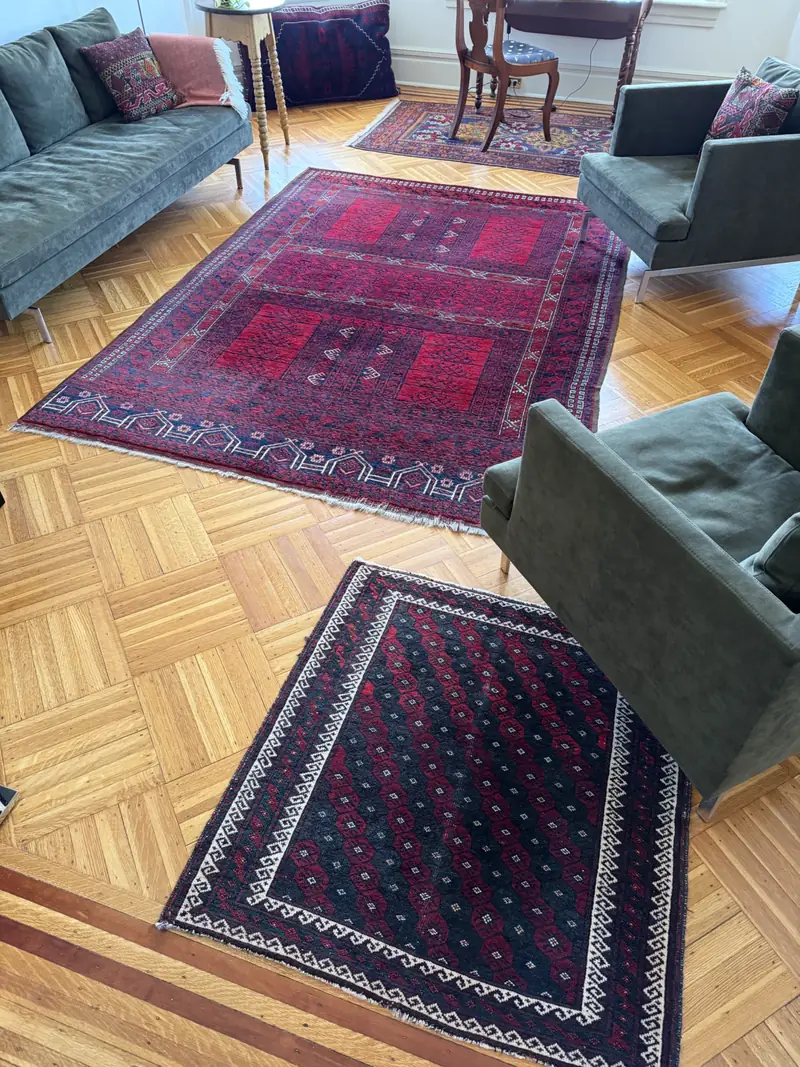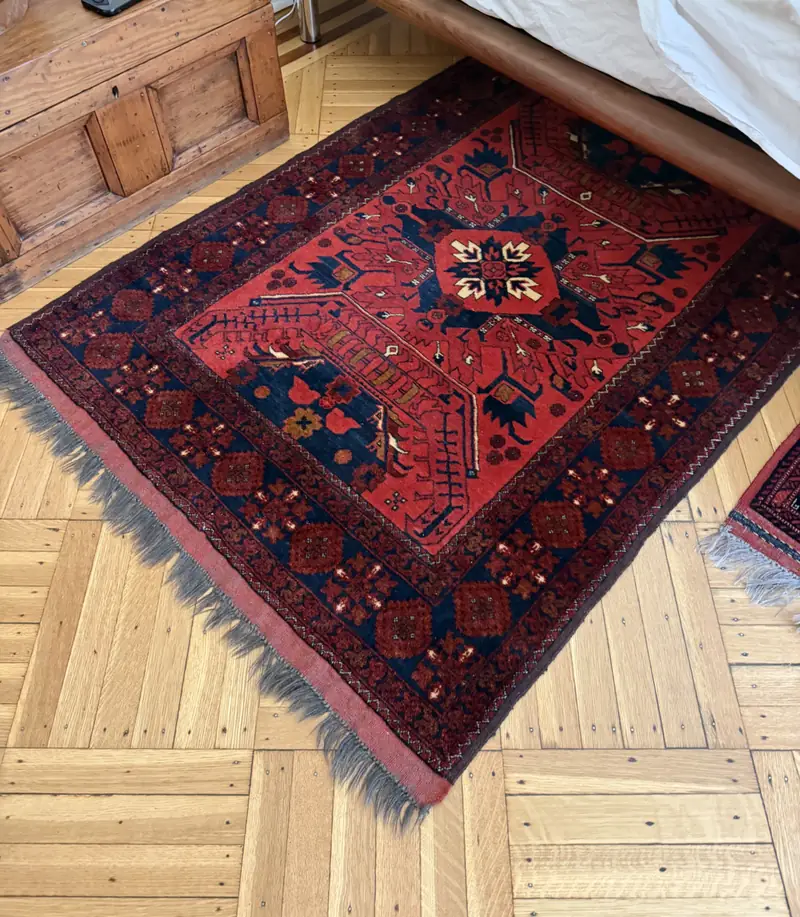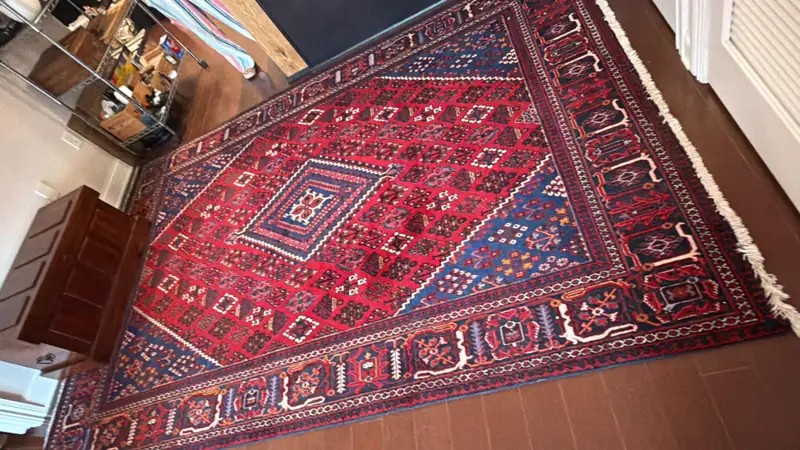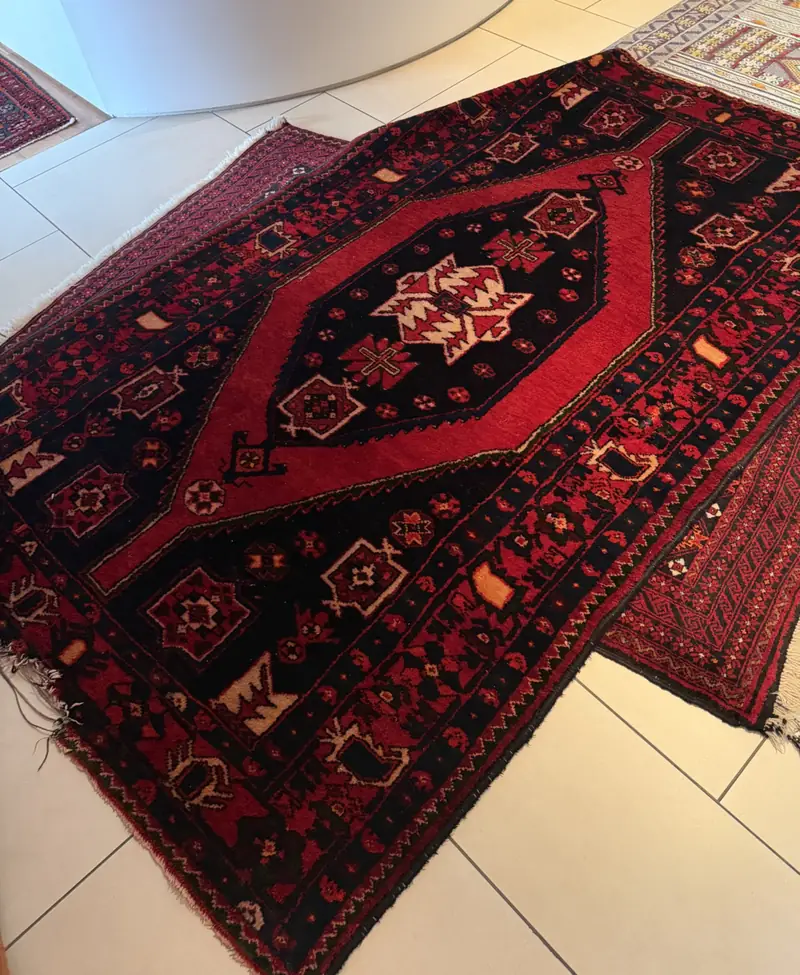
Wool and silk Oriental rugs need different cleaning because the two fibers react differently to water, heat, friction and chemistry. A sound wool rug can usually take a full immersion wash in temperature-controlled water. A silk rug needs low-moisture hand cleaning, almost no friction, and drying in ambient air. Both are protein fibers, so both are harmed by bleach and strong alkalis, but silk tolerates far less of everything else.
How the two fibers behave in water
Wool is built to handle water. Its fibers carry natural lanolin and an outer layer of overlapping scales, and the fiber can absorb a good deal of moisture without losing much strength. That is why a wool rug in good condition can be flooded, worked and rinsed thoroughly. The risk with wool is the combination of heat and agitation, which makes the scales lock together, so the pile felts and the rug shrinks. Moderate temperatures and gentle work on the pile avoid it.
Silk is different. It loses roughly a fifth of its strength when wet, and a saturated silk pile is easy to distort, crush or stretch. Water that sits on silk can also leave rings and marks that show against the sheen. For that reason, silk is cleaned with as little water as the job allows, applied and lifted out section by section, as the silk rug cleaning service describes.
Dye behavior and color testing
Wool takes dye deeply and, in a well-made rug, holds it well. Problems usually come from particular colors rather than the whole rug: a red or a blue from an unstable dye lot, or a color that was never properly fixed. Testing each dye before washing catches these, and a wool rug with one weak color can often still be washed with cooler water and quicker drying.
Silk takes dye brilliantly, which is part of its appeal, but it can release color more readily. Every color in a silk rug is tested, and the margin for error is smaller. A color that runs on silk is harder to manage because the fiber cannot take the extra rinsing that might help on wool.
At home, the test is the same for both. Press a damp white cloth against a hidden corner of each color with cool water and check for transfer. If anything comes off, stop.
Friction, sheen and pile direction
Wool forgives brushing. A soft-bristled brush worked with the nap helps loosen soil from a wool pile, and the fiber's natural spring helps it recover from handling. Friction is not a free pass on wool, because aggressive scrubbing frays the tips, but moderate agitation is part of a normal wash.
Silk's sheen comes from the smooth surface and the shape of the fiber, which reflect light along the direction of the pile. Rubbing roughens that surface. The result is a dull, fuzzy patch that looks lighter or darker than its surroundings depending on the angle, and it does not go away. Silk is therefore cleaned with blotting, gentle pressure and careful work in the direction of the nap. At home, never rub a spill on silk. Blot it, and leave anything more to a specialist.
Drying each fiber without harm
Drying is where many problems start, and the two fibers need different handling.
For wool:
- Dry quickly and evenly, with good air movement, so the cotton foundation does not stay damp long enough to brown or mildew.
- Keep the rug flat or evenly supported to prevent uneven shrinkage.
- Avoid direct high heat, which can stiffen wool and affect dyes.
For silk:
- Dry in ambient air without added heat, because heat makes silk brittle.
- Keep air moving across the surface so moisture does not linger and leave marks.
- Groom the pile by hand in its natural direction as it dries, so the sheen sits evenly.
Spill response at home for wool and for silk
The first response is the same for both: act fast and blot, do not rub. After that, the steps diverge.
On wool, blot up as much as you can with white paper towels, then dampen the spot lightly with cool water after testing a hidden corner, and blot again until no more transfers. Weigh down a dry towel over the area to draw up moisture, then lift the rug so air reaches the back.
On silk, blot with a dry white cloth and stop. Do not add water, which can ring, and do not use any cleaner. If the spill was large, or contained color, sugar or urine, the rug should be cleaned professionally before the residue sets.
For both, avoid bleach, ammonia, oxygen cleaners, vinegar on unknown dyes, and steam.
Blended rugs with silk highlights
Many fine Oriental rugs combine the two fibers, usually a wool pile with silk outlining parts of the design or forming small areas of sheen. These rugs need both sets of rules at once. The wool field might handle a full wash, but the silk details are tested separately and may need hand work to keep them from distorting or losing color.
To spot silk in a wool rug, look at it from different angles in good light. The silk areas shine more than the wool around them and feel cooler and smoother under your fingers. Point them out when you arrange a cleaning, so the assessment can plan for them. If you cannot tell whether the shine comes from silk or from mercerized cotton or viscose, say so; a fiber check during the assessment settles it before any water is used.