
Persian Rug Cleaning
in Park Slope
Deep expertise in Persian rug construction and dyes, cleaned according to region and fiber.
Arrange a pickup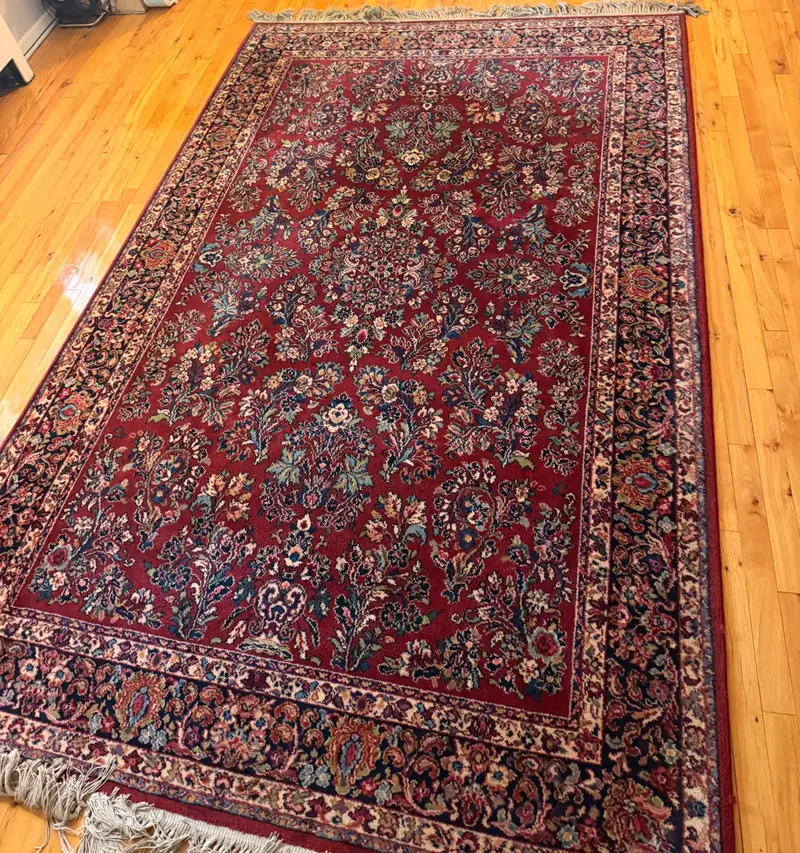 PHOTOGRAPHED BY OUR TEAM
Care begins with
understanding.
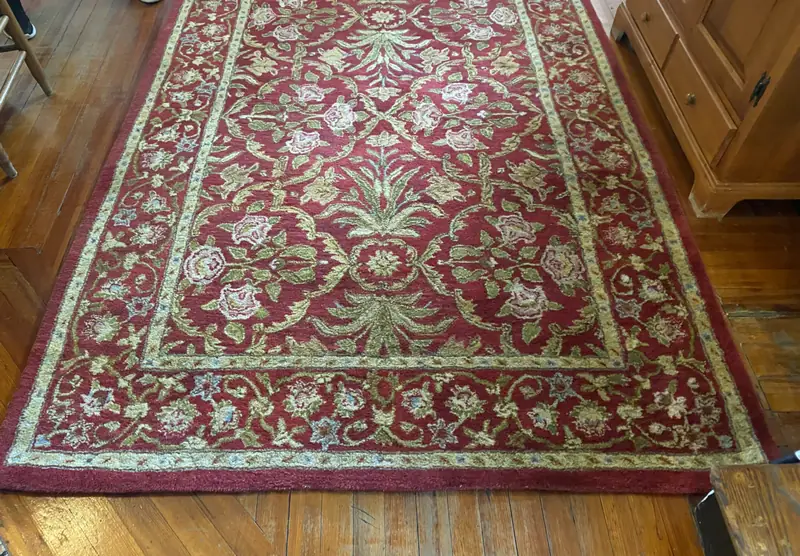
Persian rugs are among the world's most coveted textiles, each reflecting the tradition of its region, from the intricate florals of Isfahan to the bold geometry of Heriz. Our cleaning approach accounts for the specific knot density, dye type, and wool or silk composition of each Persian piece. We work to lift embedded soil and bring back color while preserving the rug's character.
We discuss the condition, recommended treatment and expected outcome with you. The appropriate method is selected after inspection; not every treatment is suitable for every rug.
Persian Rug Cleaning in Park Slope
Co-ops and condominiums hold 30 percent of Park Slope homes, and some of those buildings set the hours when a vendor may carry a rug through the building; ask the managing agent or the super and put the hours under Building access on the pickup tag. Bands of slightly different shade running across a Persian rug are called abrash. They come from wool dyed in separate small batches, they belong to the weave, and no wash evens them out; on a clean rug they often show more clearly. Before a Persian is washed, its dyes, knots and foundation are checked, and a finely knotted city rug is handled differently from a heavier village piece. Tell us the origin when you know it, and name any spot where color has run before, since both change the plan. Older pieces mostly carry natural dyes: madder gives the reds, indigo the blues, walnut hulls the browns, and each fastens to the wool at a depth of its own, which is why an old field shifts slightly from band to band. Every color is stabilized and tested before the bath, because a dye that is not fast calls for a shorter bath and a rinse taken stage by stage. The wash is an immersion done fully by hand, matched to region and to fiber, and rinsing continues until the water in the bath runs clear, because dye that stays suspended would settle back and read as a dull film. A city weave with fine knots keeps soil close to the surface, so it takes a lighter bath than a village piece, whose grit settles deep between the knots; the back of the rug tells the assessment which yours is. Drying is flat, air circulated over the pile, and the fringe work is finished by hand at the close. What changes in the room shows up mostly as brightness: the soil's gray film lifts away and uncovers the colors beneath, and the change reads most clearly at the edges, where feet never walked.
- 40%of homes in walk-ups
- 77%built before 1940
- 4floors in the median home's building
A careful
consideration.
- 01Region-specific cleaning protocols
- 02Natural dye stabilization
- 03Full immersion hand-wash
- 04Multi-stage rinsing
- 05Flat drying with air circulation
- 06Hand-finished fringe cleaning
Time for a closer look?
- Color fading from sun exposure
- Deep-set soil in dense pile
- Fringe discoloration
- Food or beverage stains
- Pet-related damage
- Dust mite accumulation
Let's care for
something remarkable.
A favorite piece. A family heirloom.
A room that feels like you again.