
Handmade Rug Cleaning
on Staten Island
Every handmade rug is unique. We assess each piece individually to honor the artisan's work.
Arrange a pickup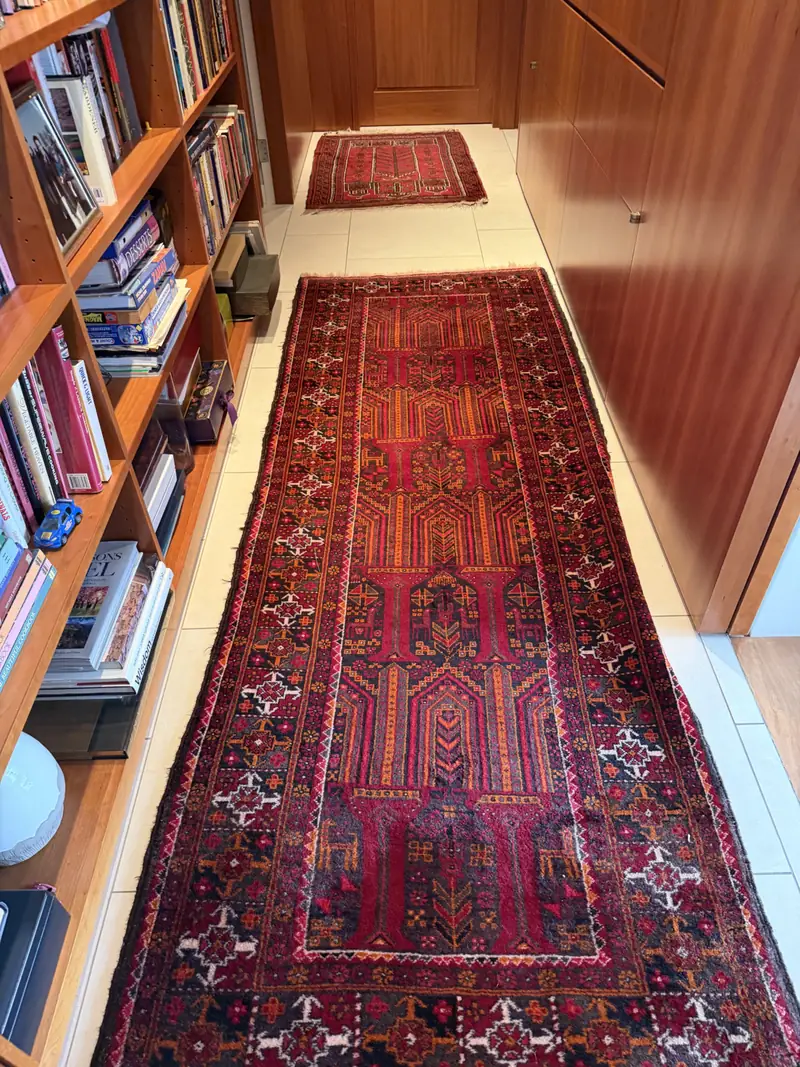 PHOTOGRAPHED BY OUR TEAM
Care begins with
understanding.
Handmade rugs, whether hand-knotted, hand-tufted, or flatwoven, represent a personal investment in craftsmanship. Each piece has unique characteristics that demand individualized attention. Our specialists examine the weave structure, fiber blend, and dye method of every handmade rug before designing a custom cleaning plan. This ensures the artisan's work is preserved while delivering a deep, revitalizing clean.
We discuss the condition, recommended treatment and expected outcome with you. The appropriate method is selected after inspection; not every treatment is suitable for every rug.
Handmade Rug Cleaning on Staten Island
Buildings from 2000 or later hold 15 percent of the homes on Staten Island, and the smooth engineered floors of a newer house are hard on a flatweave: a kilim or dhurrie laid directly on them skates underfoot, creeps toward the door with every crossing, and wears fastest along the lines where feet pivot. A thin pad underneath holds it still and spreads the wear, and it is worth saying whether the rug lies on a pad now, since padding is part of the advice that comes with the rug on return. Identification comes before any plan, because handmade rugs are built in ways that behave differently in water. A knotted rug, whose back shows the knots in the colors of the pattern, takes a hand-wash worked with gentle agitation. A hand-tufted rug relies on glue behind a cloth backing to hold its pile, and soaking weakens that bond, so it is cleaned with little moisture and dried flat. A flatweave carries no pile whatsoever: weft crosses warp, and the pattern reads the same from both sides, and it can shrink or lose its square if it is soaked and dried carelessly, so it too is dried flat and squared while it dries. If you cannot tell which kind yours is, pick I'm not sure from the Your piece list on the tag; the first look at the back settles it, and the back tells more than the front does. Say as well whether the rug was ever cleaned at home with a rented machine or a garden hose: a wash done at home can leave detergent sitting in the foundation, and detergent residue holds soil, so the wash has to clear that before it can do its own work. Fiber-safe stain treatment, low-heat drying and a final hand inspection close the process, and the rug is wrapped only after that inspection, so what comes back to the house is what was agreed. Newer houses also tend to have large window walls, so rotate a flatweave now and then to keep any change in tone spread evenly across it.
- 78%of homes in one and two family houses
- 20%built before 1940
- 2floors in the median home's building
A careful
consideration.
- 01Weave-specific assessment
- 02Custom cleaning plan per piece
- 03Hand-washing with gentle agitation
- 04Fiber-safe stain treatment
- 05Low-heat controlled drying
- 06Final hand inspection
Time for a closer look?
- Uneven soiling patterns
- Loose fibers or shedding
- Dye migration risk
- Surface stains
- Odor absorption
- General wear patterns
Let's care for
something remarkable.
A favorite piece. A family heirloom.
A room that feels like you again.