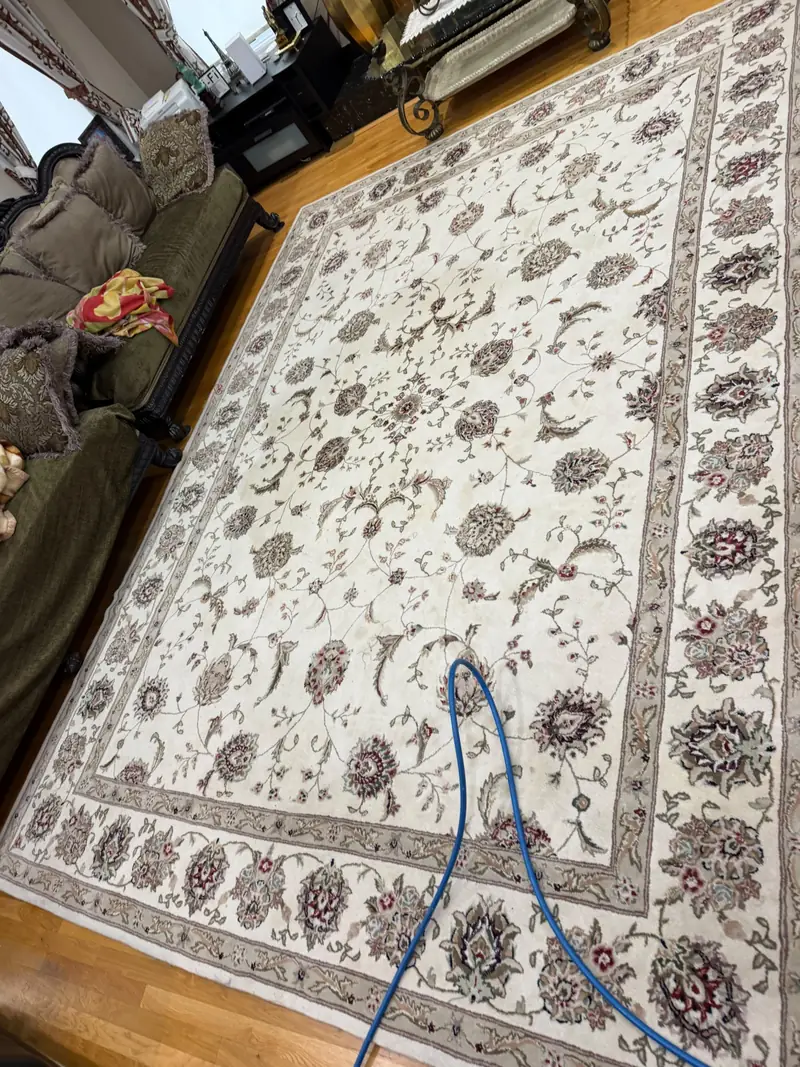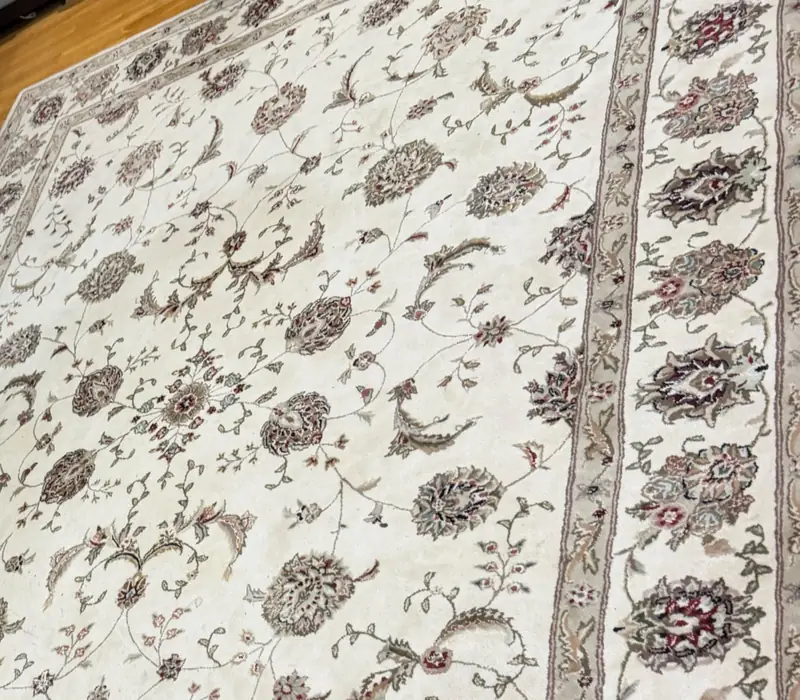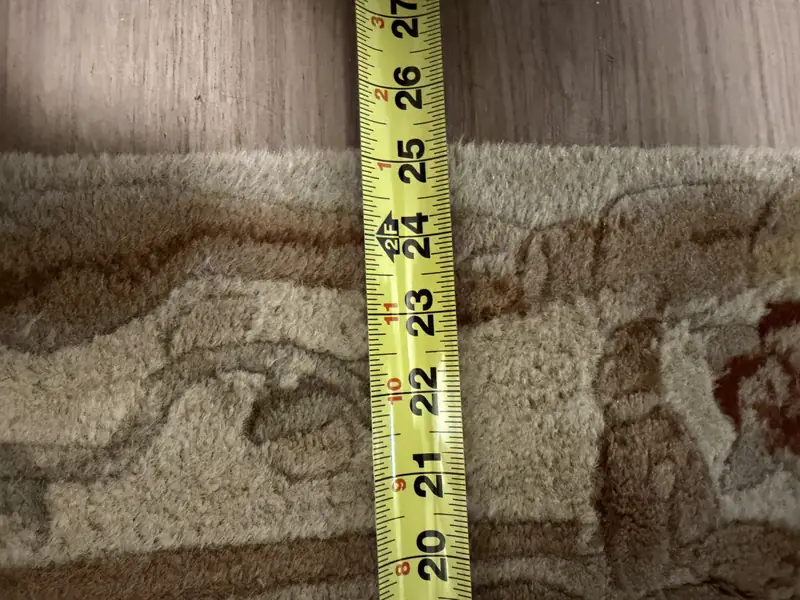
A new wool rug sheds because short, loose fibers left over from shearing and spinning work free of the pile as you walk on it. This is expected in hand-knotted and handwoven wool rugs and it tapers off over the first few months of use. A hand-tufted rug sheds in a different way, and telling the two apart matters.
What normal shedding looks like in a hand-knotted rug
In a hand-knotted wool rug, the pile is made of individual tufts of yarn, each one a knot tied around the foundation threads. When the rug is new, short fiber ends that were never fully caught in the spinning process sit loose at the surface. Walking and vacuuming work them out, and what you find in the vacuum canister looks like fine wool lint, not whole tufts. The amount is heaviest in the first weeks, drops off steadily, and is usually much lighter by the three to six month mark. A rug kept in a low traffic room will take longer to finish shedding because fewer footsteps are working the fibers loose.
Hand-tufted rugs shed a different way
A hand-tufted rug is built differently. Yarn is punched through a fabric backing with a tufting gun, then a layer of latex adhesive is applied to the back to hold the tufts in place, and a secondary backing is glued over that. These rugs tend to release more fiber for longer, and the shedding can feel heavier underfoot, almost powdery, rather than the fine lint you see from a hand-knotted piece. That difference comes from the construction itself, not from a defect, though a hand-tufted rug that keeps shedding heavily for a long stretch is worth a closer look at the backing, which is covered further down.
How to vacuum a rug while it is shedding
- Use suction only. Switch off the beater bar or use a bare floor head, since a rotating brush pulls at loose wool and can work tufts free before they are ready to let go on their own.
- Vacuum in the direction of the pile, in slow overlapping passes, rather than back and forth across the grain.
- Skip the fringe entirely. Suction and brushes fray fringe threads and loosen the knots at the rug's ends.
- Vacuum two or three times a week while shedding is heaviest, then settle into a normal weekly routine once it slows.
If the rug sheds so much that bare patches of foundation start to show through the pile within a short time, that is not ordinary fiber loss and is worth having assessed rather than vacuumed through.
When shedding points to moths instead
Moth damage does not look like fine lint. Larvae feed on wool keratin, and what they leave behind is bare or thinned patches, often in corners, under furniture, or along edges that get little light or foot traffic, places where the rug is rarely disturbed. You may also see small silken cases, powdery frass, or the pile coming away in clumps rather than single loose fibers. A rug that was fine for months and then starts losing fiber unevenly, in patches rather than across the whole surface, should be checked for moth activity before the damage spreads to the backing. Rug Moth Treatment combines a full cleaning that removes larvae and eggs with a treatment aimed at protecting the fibers that remain, and it works best started early, before the feeding reaches the foundation threads.
When shedding points to a failing backing
In a hand-tufted or machine-made rug, shedding that does not slow down after several months, or that comes out in small clumps of yarn rather than loose fibers, often means the latex adhesive holding the tufts is drying out, cracking, or losing its grip. This happens with age, with sun exposure, or with repeated wetting from spills or over-wet cleaning. Flex a corner of the rug gently and look at the back. Latex that looks chalky, cracked, or flaky rather than smooth and flexible is a sign the backing is breaking down, and no amount of vacuuming will fix that. At that point the question is less about cleaning and more about how much useful life the rug has left.
What to do if shedding does not slow down
If a hand-knotted wool rug is still shedding heavily well past six months, if a hand-tufted rug is losing clumps rather than lint, or if you see patchy bald spots, uneven wear, or any sign of moth activity, stop treating it as ordinary break-in shedding. An assessment of the fiber, the construction, and the condition of the backing will tell you whether the rug needs Wool Rug Cleaning to remove the grit and oils that make fibers brittle, a moth treatment, or more time. Method and scope are confirmed only after that assessment, since a rug with a compromised backing needs a far gentler approach than one that is sound but dusty.
Regular cleaning plays a part here too. Wool fiber relies on its natural lanolin to stay supple, and dry, grit-filled wool sheds and breaks more readily than wool that has been cared for. Periodic professional cleaning removes the soil that works its way to the base of the pile without stripping the lanolin the way harsh detergents or over-wetting can, which is part of why rental carpet machines and home steam cleaners are not a safe substitute for hand cleaning on a knotted or antique wool rug.
Questions people ask
How long should a new wool rug keep shedding?
Most hand-knotted wool rugs shed the heaviest in the first few weeks and taper off noticeably within three to six months of regular use. Shedding that stays heavy well past that point is worth having looked at rather than assumed to be normal.
Is it safe to vacuum a shedding wool rug every day?
Vacuuming two or three times a week during heavy shedding is reasonable, using suction only and no beater bar. Daily vacuuming is not necessary and adds wear for little benefit once the initial fiber loss slows.
How can I tell shedding apart from moth damage?
Shedding looks like fine, even lint spread across the whole rug and decreases over time. Moth damage shows up as thinned or bare patches, often in corners or under furniture, sometimes with powdery frass or small cases, and it tends to get worse rather than better.
Does a hand-tufted rug shed more than a hand-knotted one?
Often, yes, and for longer. A hand-tufted rug's pile is held by a glued backing rather than hand-tied knots, and that construction tends to release more fiber over a longer period, sometimes with a powdery feel rather than fine lint.
Should I stop vacuuming a rug that is shedding heavily?
No, but use suction only and skip the beater bar, since a rotating brush pulls loose fibers out faster than the rug is ready to release them. If vacuuming starts revealing bare patches of foundation, stop and have the rug assessed.
Arrange a pickup
Pickup and return are free in all five boroughs, Westchester, Long Island and New Jersey. Arrange a pickup, get a quote or call (888) 789-7001. A request is not a confirmed appointment: our team calls you to confirm the details.