
Pet Stain & Odor Removal
in Bronxville
Enzyme treatments that work deep into the fibers to break down pet stains and odors.
Arrange a pickup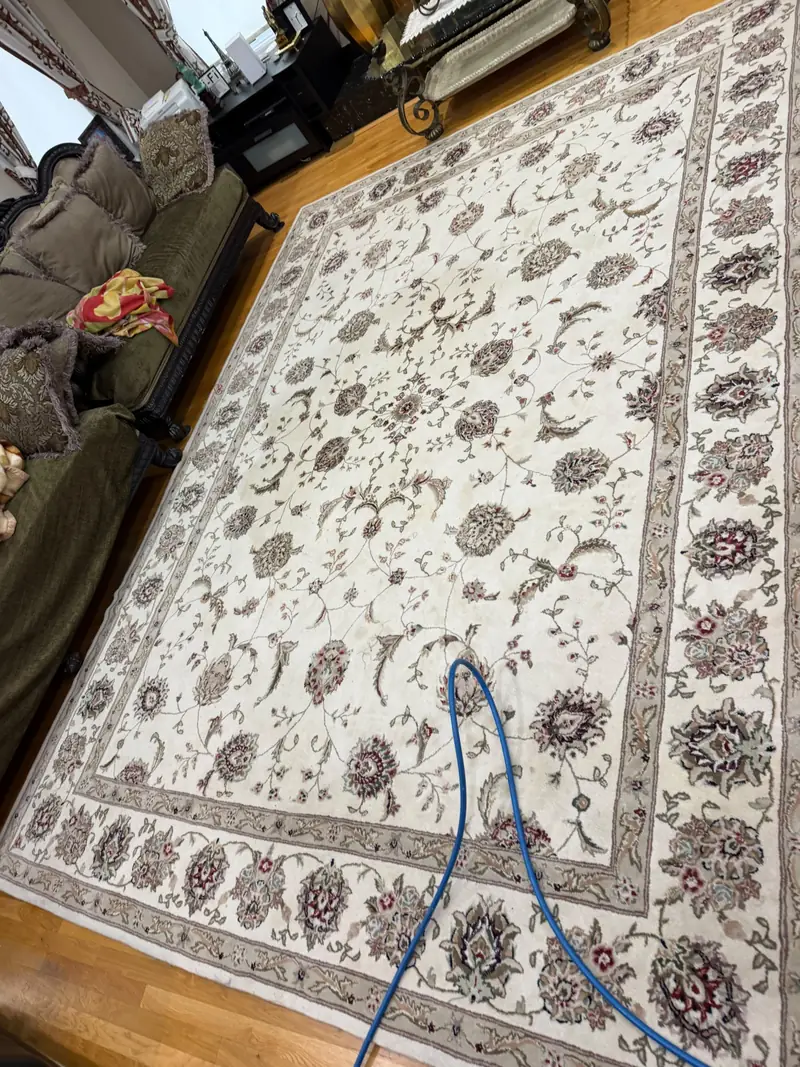 PHOTOGRAPHED BY OUR TEAM
Care begins with
understanding.
Pet accidents are one of the most common and challenging rug issues. Urine, in particular, penetrates deep into the pile, foundation, and even the floor beneath. Surface cleaning alone cannot resolve the problem. Our advanced enzyme-based treatments break down uric acid crystals, the source of lingering odor. Combined with deep sanitization and controlled drying, we address the stains and odors that surface cleaning leaves behind. We tell you before we start what can realistically improve.
We discuss the condition, recommended treatment and expected outcome with you. The appropriate method is selected after inspection; not every treatment is suitable for every rug.
Pet Stain & Odor Removal in Bronxville
Urine sinks through a rug into the foundation and, in the 70 percent of Bronxville homes built before 1940, often onto old oak floors that drink it in and darken. A dye that urine has bleached or deepened stays that way, and we show you any such spot before the work. After we take the rug, check the boards that sat under the stain; a dark mark in the wood needs a floor refinisher, or the smell can rise into the clean rug. Blot fresh accidents with plain water and towels, and keep scented sprays off, since some fix the stain. How long the accident has been there decides nearly everything. A fresh one sits in the pile, and a deep flushing carries almost all of it out; one a week old has worked its way down to the foundation, so the enzyme work then has to soak the full thickness of the rug to break the crystals of uric acid that keep producing smell on their own; one months old has wicked into the oak underneath, where nothing applied to the rug can follow it. That is why the first question is when it began, and the straight answer matters more than an agreeable one. The work then runs in order: UV light mapping finds every accident the piece carries, including the faint ones nobody noticed, because a cat that favors one corner writes its whole history there; the enzyme treatment follows the map and is given time to work, since breaking uric acid is chemistry on a clock rather than a rinse; antimicrobial sanitization comes after, and drying is then managed so dissolved soil cannot climb back toward the surface as the rug dries, the wicking that turns a cleaned spot into a returning one. Odor verification closes it, a measurement rather than a hopeful nod. Before pickup, tell us the animal, roughly when each accident happened, and whether anything from the store was already applied, since some supermarket products seal the odor in and have to be undone first. Vomit and feces carry their own treatments, different from urine and from each other, and the tag tells us which to prepare. What the service changes is the smell and the soil; what it cannot change is the color the urine has already taken, and that limit is shown to you, marked on the piece, before the work starts, so the expectation is set on both sides at once.
- 41%single family houses
- 70%built before 1940
- 84%owner occupied
A careful
consideration.
- 01UV light stain mapping
- 02Enzyme-based uric acid treatment
- 03Deep fiber flushing
- 04Antimicrobial sanitization
- 05Controlled drying to prevent wicking
- 06Odor verification testing
Time for a closer look?
- Visible urine stains
- Persistent ammonia odor
- Repeated pet marking
- Vomit or fecal staining
- Discoloration around stain
- Bacterial contamination
Let's care for
something remarkable.
A favorite piece. A family heirloom.
A room that feels like you again.