
Pet Stain & Odor Removal
in Brooklyn
Enzyme treatments that work deep into the fibers to break down pet stains and odors.
Arrange a pickup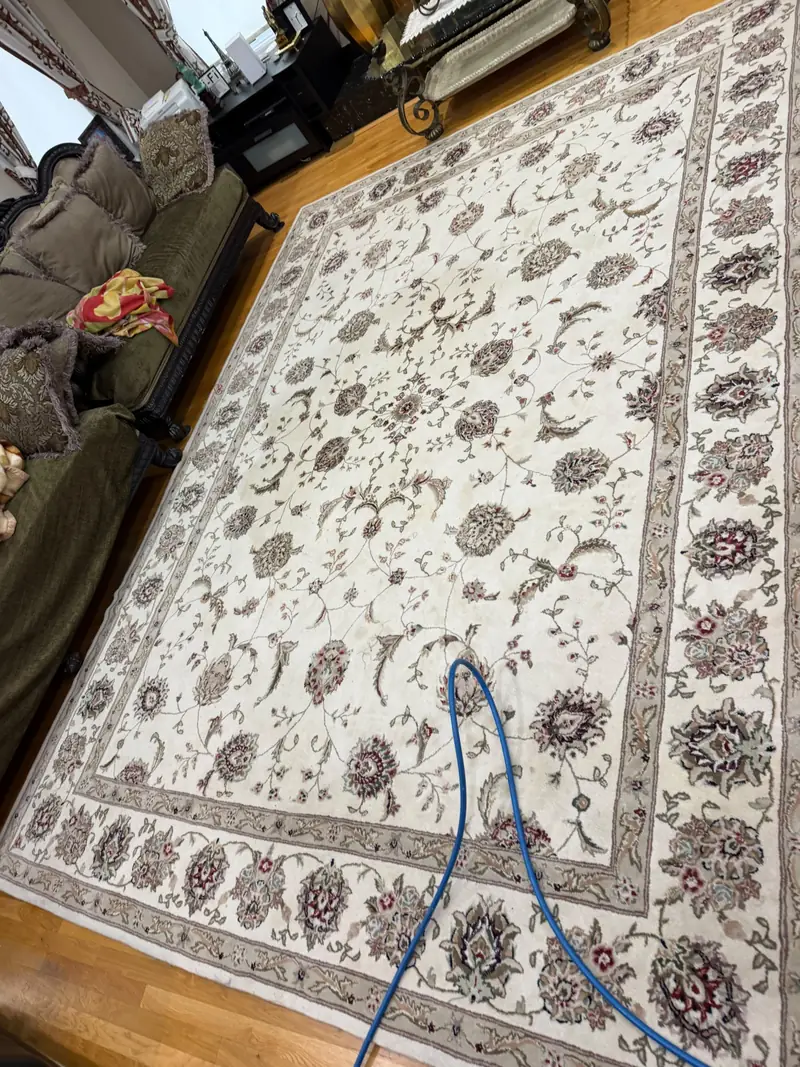 PHOTOGRAPHED BY OUR TEAM
Care begins with
understanding.
Pet accidents are one of the most common and challenging rug issues. Urine, in particular, penetrates deep into the pile, foundation, and even the floor beneath. Surface cleaning alone cannot resolve the problem. Our advanced enzyme-based treatments break down uric acid crystals, the source of lingering odor. Combined with deep sanitization and controlled drying, we address the stains and odors that surface cleaning leaves behind. We tell you before we start what can realistically improve.
We discuss the condition, recommended treatment and expected outcome with you. The appropriate method is selected after inspection; not every treatment is suitable for every rug.
Pet Stain & Odor Removal in Brooklyn
In walk-ups, which cover 31 percent of Brooklyn homes, a rug with a pet problem has one more trip to make, down a shared stair, and it travels completely wrapped so nothing it carries touches anything else on the way; the wrapping is done at your door and the piece is never opened in the hall. What happens before that trip shapes the result: press cold water and plain towels onto any fresh accident, roll the rug back from the spot so the boards beneath can dry, and keep every scented spray and household cleaner off it, since some of them set the stain and the smell into the fiber. When booking, say roughly how long the problem has gone on, because age decides reach: a fresh spot occupies the pile alone, a week-old one has soaked the foundation, and one that has sat for months has carried through to the floor beneath, where the boards can hold the smell after the rug itself is clean. The work starts with a map, an ultraviolet light that brings out every place the acid has reached, including halos that look clean under room lighting, and the map decides where the flushing goes. Enzyme treatment then breaks down the uric acid crystals that keep an old smell alive, and it has to reach as deep as the urine did; a surface-only pass leaves the deeper crystals waiting and the smell returns when the room warms. Where the foundation has been soaked, the treatment passes through the entire piece, and an antimicrobial step follows where bacteria have settled in. Controlled drying prevents wicking, the upward creep of moisture as a rug dries, which carries stain back toward the surface of the pile; that is why an accident that seemed resolved can ring again days later when a rug dried badly at home. The work closes with an odor verification before wrapping. Blot fresh accidents with plain towels, keep scented products off the rug, and bring every question about color loss to the assessment, where the answer comes before any work begins.
- 31%of homes in walk-ups
- 57%built before 1940
- 4floors in the median home's building
A careful
consideration.
- 01UV light stain mapping
- 02Enzyme-based uric acid treatment
- 03Deep fiber flushing
- 04Antimicrobial sanitization
- 05Controlled drying to prevent wicking
- 06Odor verification testing
Time for a closer look?
- Visible urine stains
- Persistent ammonia odor
- Repeated pet marking
- Vomit or fecal staining
- Discoloration around stain
- Bacterial contamination
Let's care for
something remarkable.
A favorite piece. A family heirloom.
A room that feels like you again.