
Antique Rug Cleaning
in Cobble Hill & Carroll Gardens
Gentle, low-agitation cleaning for vintage and antique rugs, with preservation first.
Arrange a pickup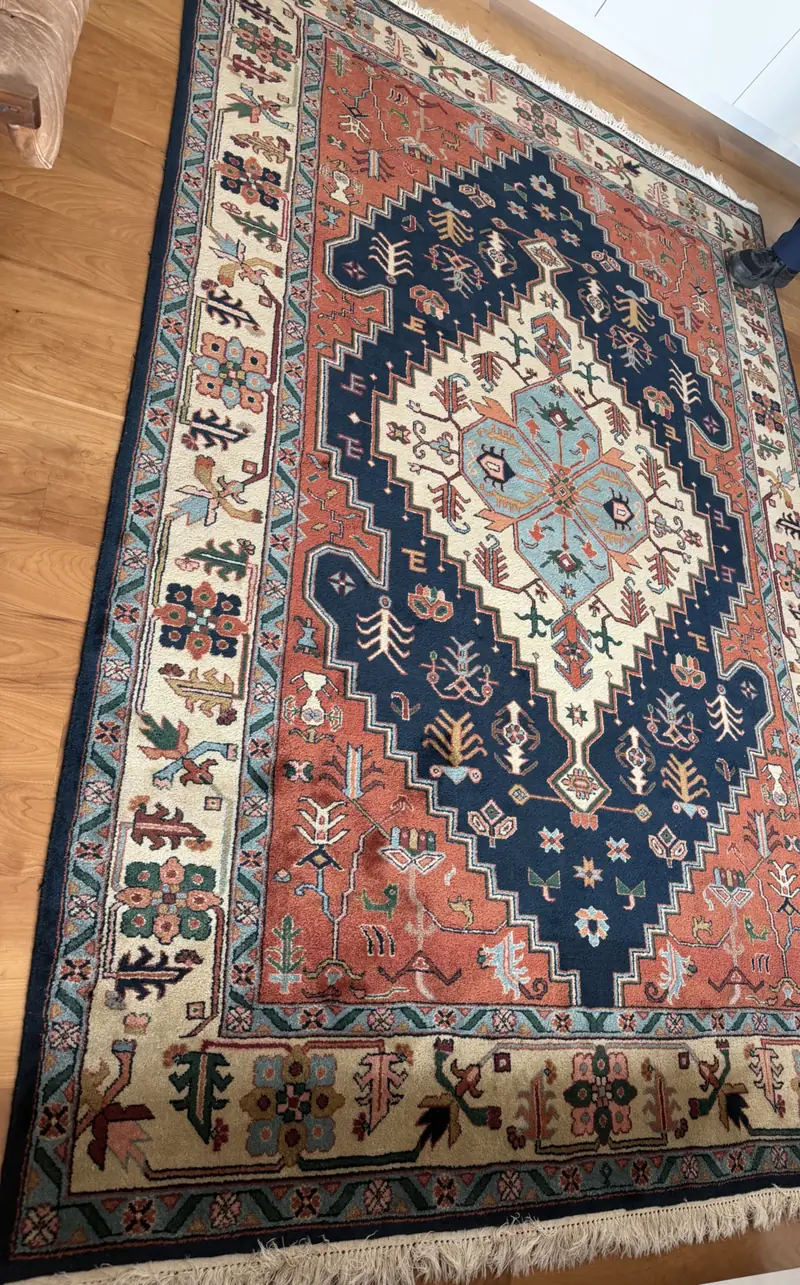 PHOTOGRAPHED BY OUR TEAM
Care begins with
understanding.
Antique rugs require an extraordinarily careful approach. Age, natural dyes, and delicate fibers demand cleaning techniques that prioritize preservation above all else. Our specialists evaluate each antique piece for colorfastness, structural integrity, and fiber fragility before selecting a cleaning protocol. We use gentle, low-agitation methods that remove decades of accumulated soil while honoring the character and patina that make your rug a treasure.
We discuss the condition, recommended treatment and expected outcome with you. The appropriate method is selected after inspection; not every treatment is suitable for every rug.
Antique Rug Cleaning in Cobble Hill & Carroll Gardens
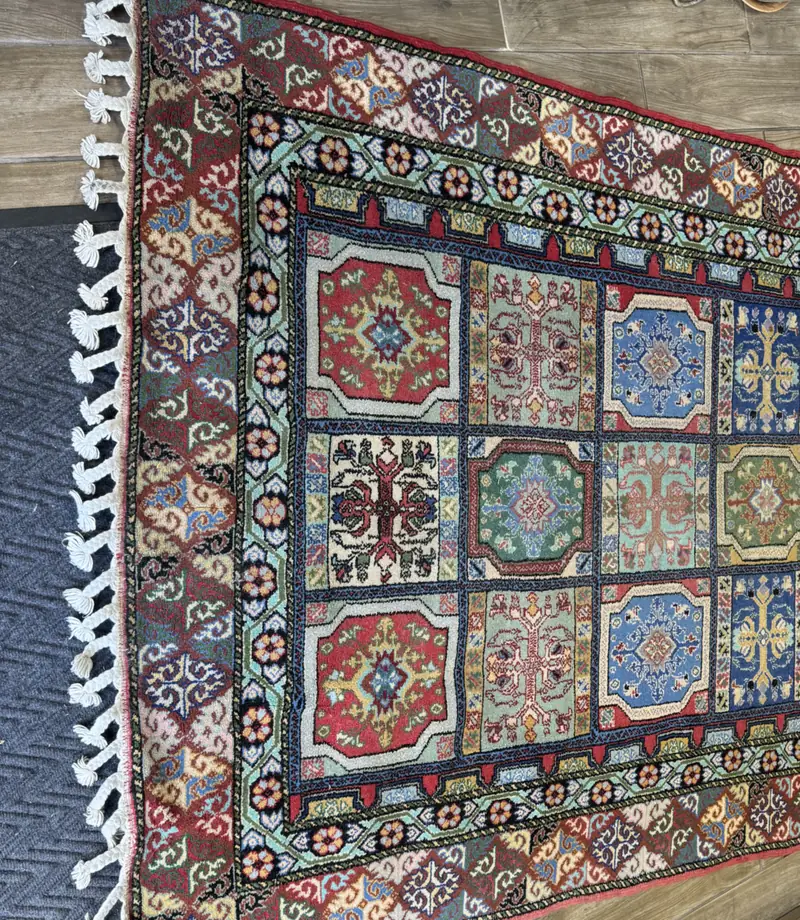
A neighborhood whose buildings center on 1938 keeps a good many rugs almost as old as its houses, and the sides and ends of an antique take the wear first: the cord sewn along each side loosens, knots at the ends work free, and a rug that has been moved through several homes carries the creases and re-edges of those moves. Run a finger along each side and end before the pickup day, and report any loose cord or missing knots at booking, because a side that has let go gets worse with every handling and is safer secured before the wash than after. Where the piece leaves a row house it goes down the front steps rolled loosely and supported along its full length, never folded over an arm, since a bend across an old foundation can crackle its way into a crease that stays. Row houses here keep their cellars dry by sump pump and by luck, and a rug stored in one over a summer can pick up a mustiness worth a line on the tag. The cleaning is a slow business by design: colors are trialed on a hidden corner, the bath stays cool and close to neutral, and the piece is handled as seldom as we can manage while it is wet, because cotton foundations that have dried with age lose their give and the knots they carry sit loose in it. Repairs from earlier decades, a rewoven square or a re-stitched side, are catalogued before anything is wet and routed around in the wash, since each sits differently from the original work. Drying runs flat and unhurried, the nap eased by hand while damp, and where the pile has worn down in a walkway, that loss is described at the assessment rather than discovered afterward, because worn pile stays worn whatever the wash does. What the wash changes: the dust of years that has dimmed the whole field lifts away, and the pattern beneath reads plainly again. What it cannot change: brittleness already in the foundation, and pile already gone, both of which remain and are pointed out to you.
- 41%of homes in elevator buildings
- 52%built before 1940
- 4floors in the median home's building
A careful
consideration.
- 01Colorfastness testing
- 02Low-agitation hand-cleaning
- 03Natural pH-neutral solutions
- 04Controlled flat drying
- 05Gentle pile realignment
- 06Careful, supported handling
Time for a closer look?
- Decades of embedded dust
- Fragile or brittle fibers
- Color bleeding risk
- Moth or insect residue
- Musty storage odor
- Surface grime obscuring pattern
Let's care for
something remarkable.
A favorite piece. A family heirloom.
A room that feels like you again.