
Antique Rug Cleaning
in Brooklyn Heights
Gentle, low-agitation cleaning for vintage and antique rugs, with preservation first.
Arrange a pickup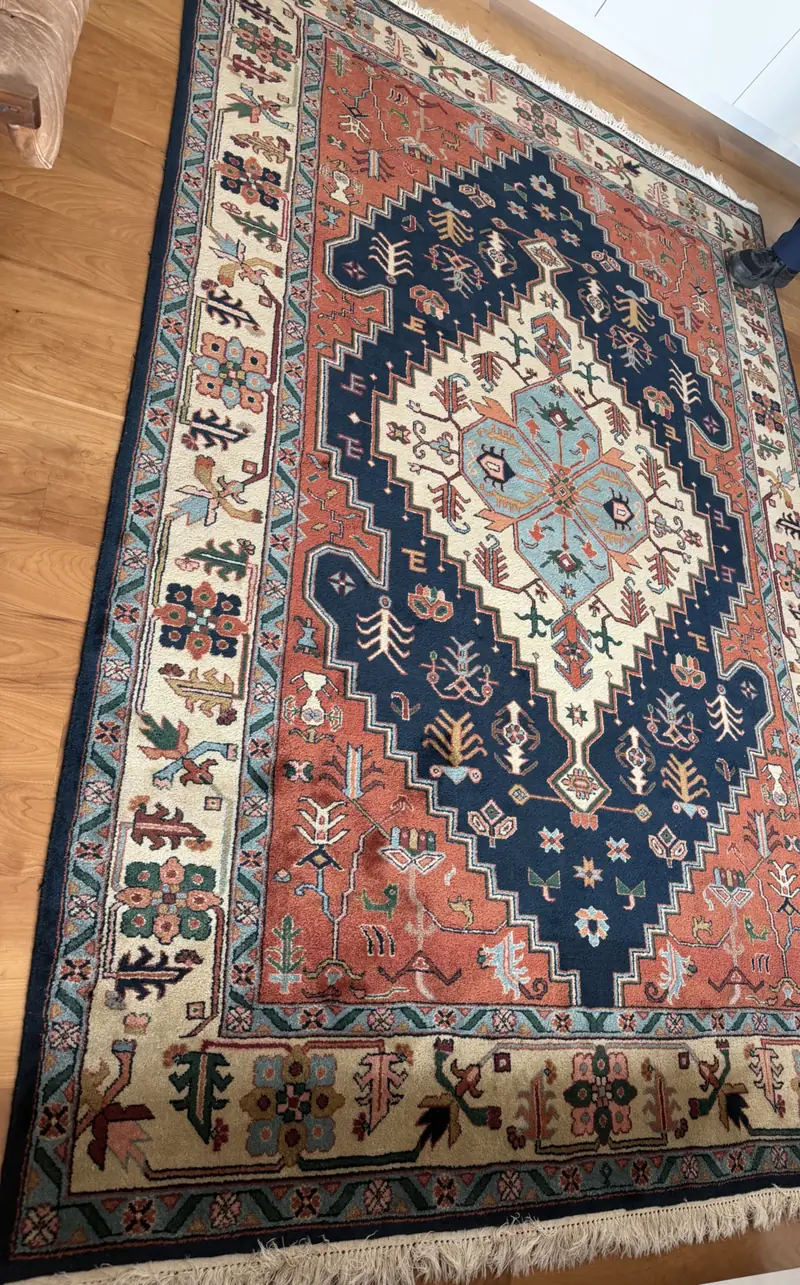 PHOTOGRAPHED BY OUR TEAM
Care begins with
understanding.
Antique rugs require an extraordinarily careful approach. Age, natural dyes, and delicate fibers demand cleaning techniques that prioritize preservation above all else. Our specialists evaluate each antique piece for colorfastness, structural integrity, and fiber fragility before selecting a cleaning protocol. We use gentle, low-agitation methods that remove decades of accumulated soil while honoring the character and patina that make your rug a treasure.
We discuss the condition, recommended treatment and expected outcome with you. The appropriate method is selected after inspection; not every treatment is suitable for every rug.
Antique Rug Cleaning in Brooklyn Heights
Among these blocks, where construction centers on 1926, the apartment radiator is nearly as old as the district itself, and an antique rug spread near one loses moisture to the air every heating season until its cotton foundation dries past the point of flexibility. Dry warps snap instead of bending, and the knots they carry loosen their grip, so an old rug near dry heat gets a wash planned around that fragility: brief, cool, and with handling kept to a minimum while the piece is wet. Slide your palm along the underside before the pickup date; a crackling feel or a stiff band across the back signals a foundation in trouble and should go on the tag in plain words, with the rug left lying flat rather than coiled while it waits. Prior to any washing, colors are trialed and the foundation examined end to end, and the findings are laid out for you: where the structure can take a normal wash, where it calls for a diluted one, and where a repair must precede cleaning or the piece will shed knots. Hand work replaces machine work at every stage, in near-neutral solutions, because vegetable dyes of the period can bleed into a bath long before a synthetic dyestuff would. Flat, slow drying follows, with the nap coaxed back into alignment by hand while the piece is still damp, since brittle fibers lose pile at the knots when brushed hard once dry. Every previous mend, from a rewoven square to a re-bound edge, is catalogued at intake, and the wash is routed so that no repair is strained. Creases picked up in storage are treated as structural history: a fold held for decades may relax in the bath yet never again lie dead flat, and the assessment says so at the outset. What the wash delivers: dust that has dulled the whole field for years lifts away, and the drawing beneath reads plainly again. What it cannot deliver: foundation brittleness already present, and pile ground away by feet, both of which remain and are pointed out.
- 51%of homes in elevator buildings
- 69%built before 1940
- 6floors in the median home's building
A careful
consideration.
- 01Colorfastness testing
- 02Low-agitation hand-cleaning
- 03Natural pH-neutral solutions
- 04Controlled flat drying
- 05Gentle pile realignment
- 06Careful, supported handling
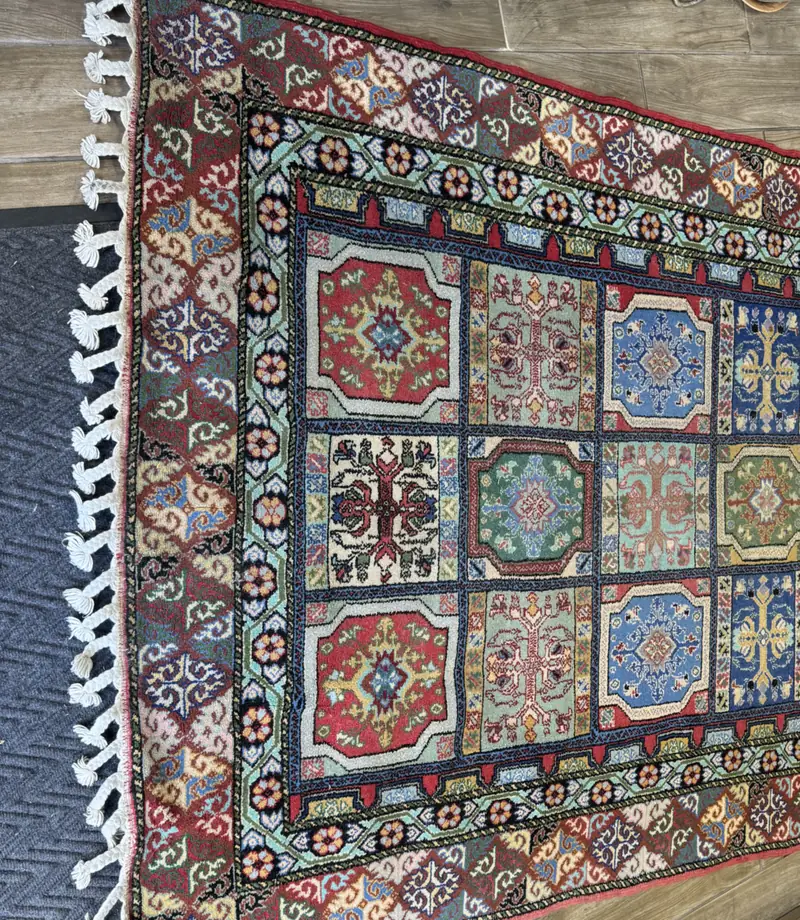
Time for a closer look?
- Decades of embedded dust
- Fragile or brittle fibers
- Color bleeding risk
- Moth or insect residue
- Musty storage odor
- Surface grime obscuring pattern
Let's care for
something remarkable.
A favorite piece. A family heirloom.
A room that feels like you again.