
Antique Rug Cleaning
in Greenwich Village
Gentle, low-agitation cleaning for vintage and antique rugs, with preservation first.
Arrange a pickup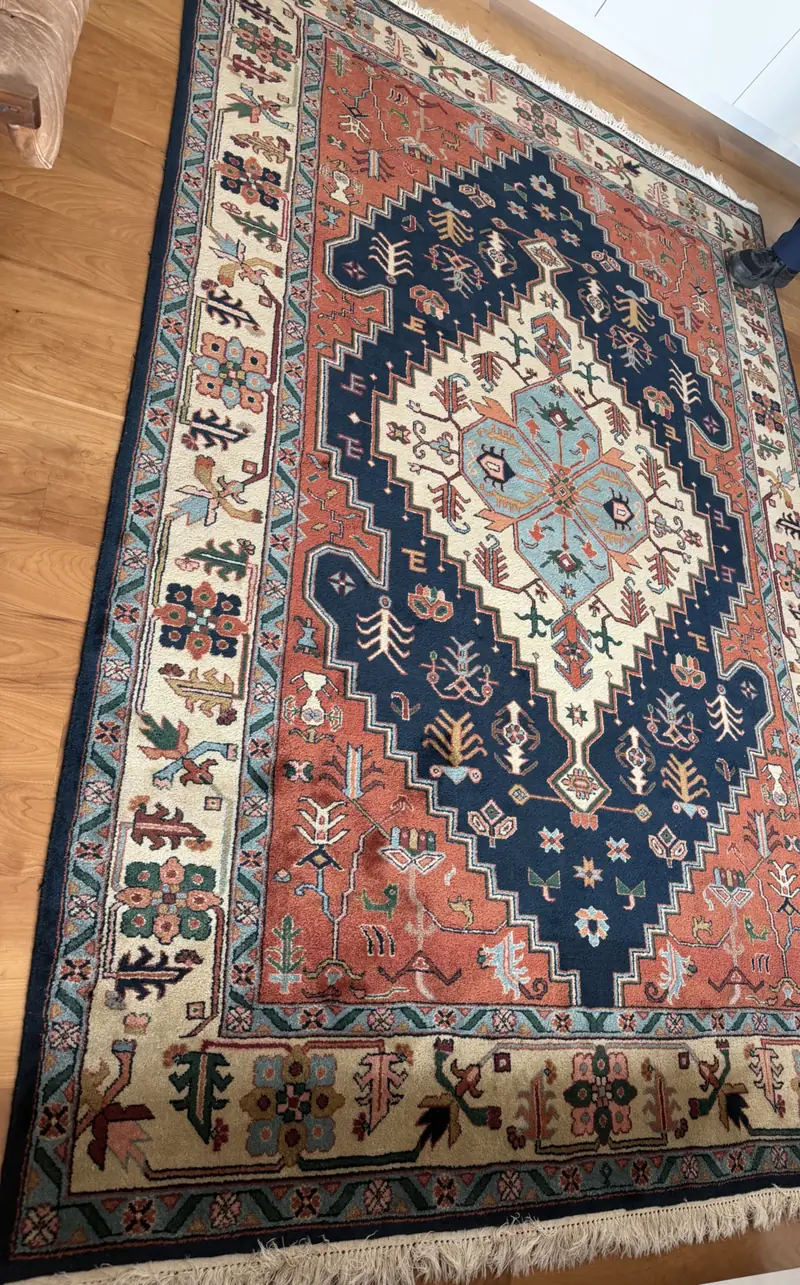 PHOTOGRAPHED BY OUR TEAM
Care begins with
understanding.
Antique rugs require an extraordinarily careful approach. Age, natural dyes, and delicate fibers demand cleaning techniques that prioritize preservation above all else. Our specialists evaluate each antique piece for colorfastness, structural integrity, and fiber fragility before selecting a cleaning protocol. We use gentle, low-agitation methods that remove decades of accumulated soil while honoring the character and patina that make your rug a treasure.
We discuss the condition, recommended treatment and expected outcome with you. The appropriate method is selected after inspection; not every treatment is suitable for every rug.
Antique Rug Cleaning in Greenwich Village
Dry rot is the quiet danger in an old rug. Where water has stood again and again, under a planter or beside a window that leaks in rain, the cotton foundation loses its strength and can crack when the rug is bent, even while the pile above still looks whole. Before pickup, press along any area that feels stiff, or listen for a faint crackle when a corner is lifted, and mention what you find; the rug is then rolled with that area supported and carried without being flexed. Three in five homes in Greenwich Village date from before 1940 and the median year built is 1929, so many rugs here share their age with the building they lie in, and age shows in particular places. The pile stands shortest where the piece was used longest. Ends that were trimmed decades ago leave the end knots sitting close to the edge, and those knots get particular attention in the bath. A fold line from a move years back may have taken a set in the warp that softens in the bath without ever lying perfectly flat again, and that belongs to what age does to a piece. An antique rug is cleaned with as little agitation as its soil allows, in a short, cool bath, and moved as little as possible while wet, because a foundation that has dried out has less give and the knots hold less tightly than they once did. Earlier repairs are recorded before anything begins: a patch rewoven at a later date or a fringe sewn on afterward can sit a little differently from the work around it, and the wash should not undo it. Some marks of age are better left alone, and we say which those are before the work starts, so the piece keeps the character that makes it what it is. What comes back is the soil of decades lifted out, the colors as the years have left them, and a plain account of what was done and what stayed untouched.
- 46%of homes in elevator buildings
- 58%built before 1940
- 11floors in the median home's building
A careful
consideration.
- 01Colorfastness testing
- 02Low-agitation hand-cleaning
- 03Natural pH-neutral solutions
- 04Controlled flat drying
- 05Gentle pile realignment
- 06Careful, supported handling
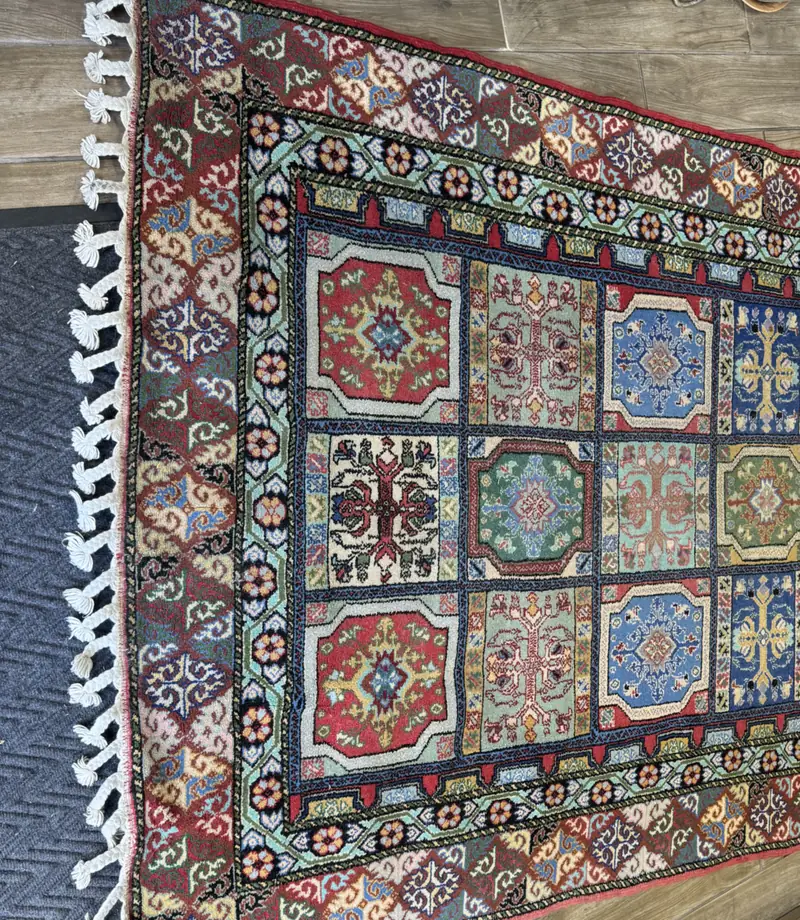
Time for a closer look?
- Decades of embedded dust
- Fragile or brittle fibers
- Color bleeding risk
- Moth or insect residue
- Musty storage odor
- Surface grime obscuring pattern
Let's care for
something remarkable.
A favorite piece. A family heirloom.
A room that feels like you again.