
Wool Rug Cleaning
in Jersey City
Expert care for wool and wool-blend rugs, maintaining natural lanolin and preventing shrinkage.
Arrange a pickup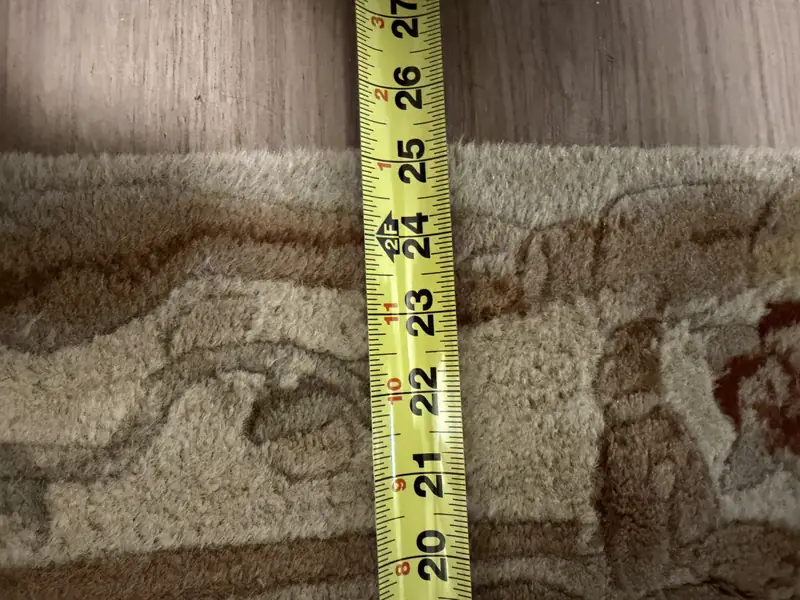 PHOTOGRAPHED BY OUR TEAM
Care begins with
understanding.
Wool is prized for its resilience, warmth, and natural soil resistance. However, improper cleaning can strip lanolin, cause shrinkage, or distort the pile. Our wool rug cleaning process respects the fiber's natural properties, using temperature-controlled water and wool-safe solutions to deep clean without damage. The result is a thoroughly cleaned rug with revived texture, restored softness, and strong color.
We discuss the condition, recommended treatment and expected outcome with you. The appropriate method is selected after inspection; not every treatment is suitable for every rug.
Wool Rug Cleaning in Jersey City
A new wool rug sheds for its first months and fuzzes where traffic is heavy, and both are normal; vacuum often, without the beater bar, and the shedding slows. Owners live in 28 percent of Jersey City homes, and in a house a wool rug that goes into the basement or the attic for the summer should be cleaned first, because moths are drawn to the soil and body oils a used rug holds. Check a stored rug for bare tracks or webbing along its inner turns before booking, and if you see them, choose Moth treatment under Care needed. Wool's own protection is lanolin, the wax in the fiber, and the wash is run to keep it: the water sits under temperature control, warm rather than scalding, because heat and harsh solutions roughen the scales along each fiber and leave the pile feeling dry and raspy. An enzymatic wool-safe solution does the work on soil, and the rinse carries it off without stripping the lanolin behind it. Spinning most of the water out before drying keeps the rug from sitting damp, which is what shrinks edges and browns a back; drying itself is warm air under control, and then the pile is brushed back into the lay it belongs in. What washing gives back is depth and softness: grit at the base of the pile cuts fibers underfoot and dulls the surface, and a rug that seemed tired reads differently once that grit is out. Blot a spill with a dry white towel, pressing straight down and lifting, and skip the scrubbing, which tangles the pile; wool buys a few minutes before a spill soaks past the surface, and what you do in them decides the stain. In a house, the wool rug washed least often is the one under the dining table or along the hall, and those are also the spots where moth larvae feed, since they work where a rug lies undisturbed at the edge or under furniture that never moves. The damage looks like bare foundation with a fuzz of fiber at its rim, and it does not grow back; reweaving a patch is separate work, priced at the assessment before anything begins. Turn a hall rug end to end a few times over the year so the wear spreads instead of repeating in one track, and if the rug is headed for a basement or attic for the warm months, have it cleaned before it is stored, then wrap it in paper rather than plastic, which traps damp.
- 14%single family houses
- 29%built before 1940
- 28%owner occupied
A careful
consideration.
- 01Temperature-controlled immersion
- 02Wool-safe enzymatic cleaning
- 03Lanolin-preserving rinse
- 04Centrifugal water extraction
- 05Controlled warm-air drying
- 06Pile brushing and grooming
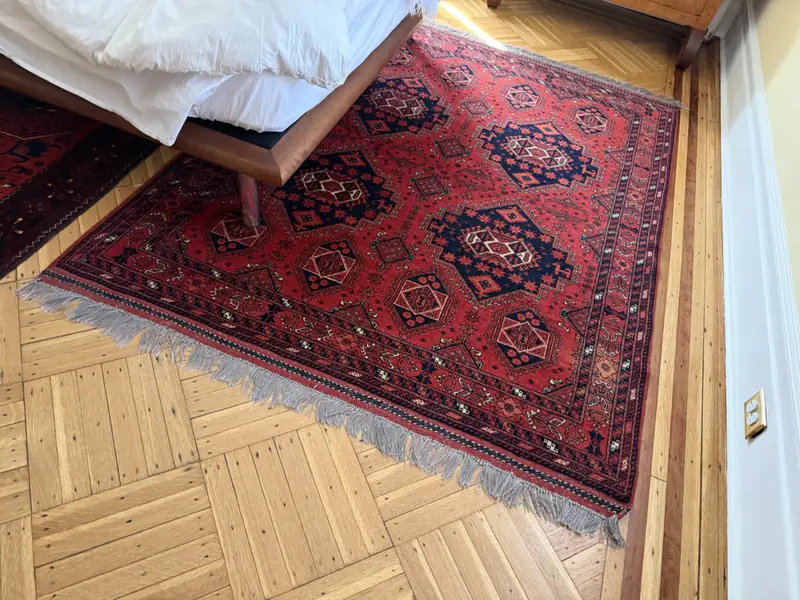
Time for a closer look?
- Matted or crushed pile
- Embedded grit and soil
- Pet hair accumulation
- Dull or faded appearance
- Mild to moderate stains
- Musty odor
Let's care for
something remarkable.
A favorite piece. A family heirloom.
A room that feels like you again.