
Oriental Rug Cleaning
in Manhattan
Specialized hand-cleaning for Persian, Turkish, Moroccan, Afghan, and all handwoven oriental rugs.
Arrange a pickup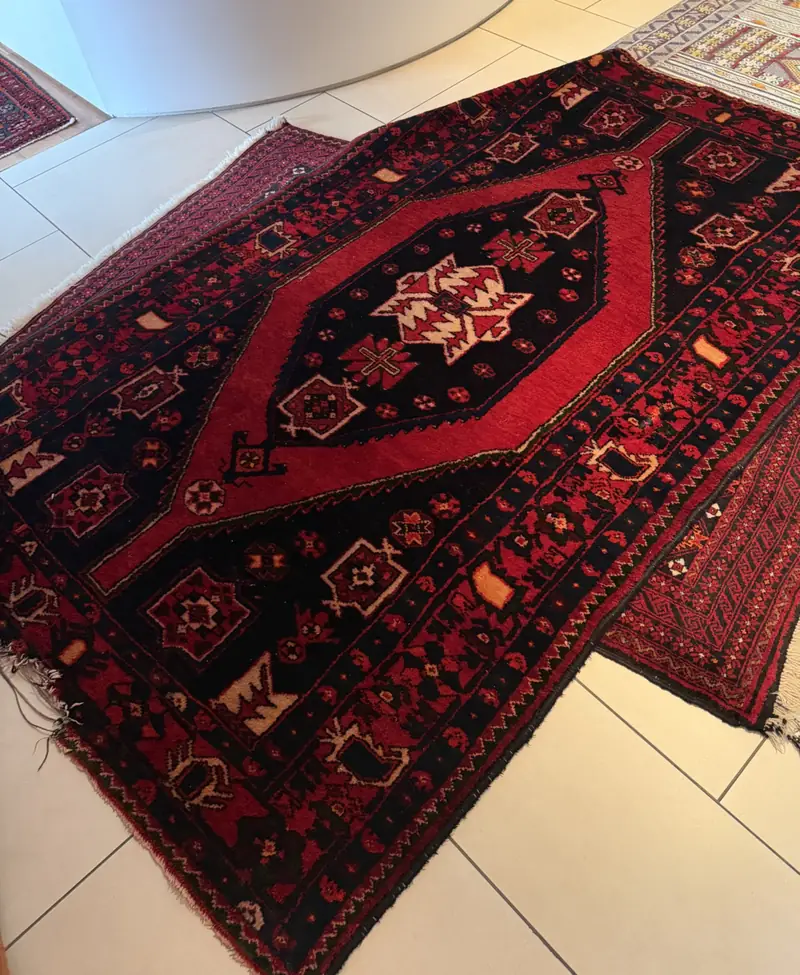 PHOTOGRAPHED BY OUR TEAM
Care begins with
understanding.
Oriental rugs represent centuries of artisan tradition. Our specialists understand the unique construction, dye chemistry, and fiber composition of each origin, from Tabriz and Isfahan to Oushak and Beni Ourain. Every oriental rug we receive is assessed individually and cleaned using methods calibrated to its specific weave, age, and condition. We remove embedded soil, restore vibrancy, and preserve the integrity that makes each piece irreplaceable.
We discuss the condition, recommended treatment and expected outcome with you. The appropriate method is selected after inspection; not every treatment is suitable for every rug.
Oriental Rug Cleaning in Manhattan
An oriental rug on an old wood floor tends to creep and crease where the boards dip, and old floors are common in Manhattan, whose median home sits in a building from 1940. A thin felt and rubber pad stops that and keeps grit from grinding into the back of the rug. Before cleaning, the dyes are checked for any that could bleed, and earlier repairs and worn pile are pointed out so you know what to expect. If a color has ever run after a spill, mention it on the pickup tag, and give us the rug's measurements there as well, even rough ones. On the day, the rug is rolled with its pile facing in for the trip. What happens after the rug reaches the bench is slower than the word cleaning suggests. The washing is a full immersion hand-wash whose bath is matched to the fiber rather than taken from a shelf, because a solution balanced for the weave is what keeps the colors from walking into one another. Each color is tested before the rug enters the bath; a red that has bled once in a spill will try again in a tub of water, and stabilization is applied where the test says it is wanted. The rinse goes on until the water comes away clear, since soap left between the knots brings soil back within weeks. Drying is low and controlled, never on heat, because a hot dry pulls a wet rug out of shape. The pile is finished by hand and the fringe detailed at the end, and that is where much of the difference shows: a rug brushed in the direction the knots lie reads deeper in color than one kicked about by a machine. What you can do before the day is small and useful. Vacuum both sides if the rug can be turned, note the age and origin if you know them, and say whether the rug sits under a dining table where food lands. One treatment worth naming: where the pile has been worn short along a traffic lane, the hand finishing lifts what is left so the lane does not read as a bald stripe. What the wash changes in the end is plain to see. Grit that a vacuum could not reach comes out of the foundation, the colors regain the depth dust had flattened, and a rug that shed a fine haze of fiber every week for months usually stops shedding, because the shedding was grit-cut wool coming loose, and once the grit is out it stops.
- 54%of homes in elevator buildings
- 50%built before 1940
- 12floors in the median home's building
A careful
consideration.
- 01Full immersion hand-washing
- 02pH-balanced fiber-specific solutions
- 03Color stabilization testing
- 04Controlled low-temperature drying
- 05Hand-groomed pile finishing
- 06Fringe detailing
Time for a closer look?
- Fading or dull colors
- Embedded dirt and grit
- Musty or stale odor
- Pet stains and discoloration
- Fringe yellowing
- Moth or insect damage residue
Let's care for
something remarkable.
A favorite piece. A family heirloom.
A room that feels like you again.