
Persian Rug Cleaning
in SoHo
Deep expertise in Persian rug construction and dyes, cleaned according to region and fiber.
Arrange a pickup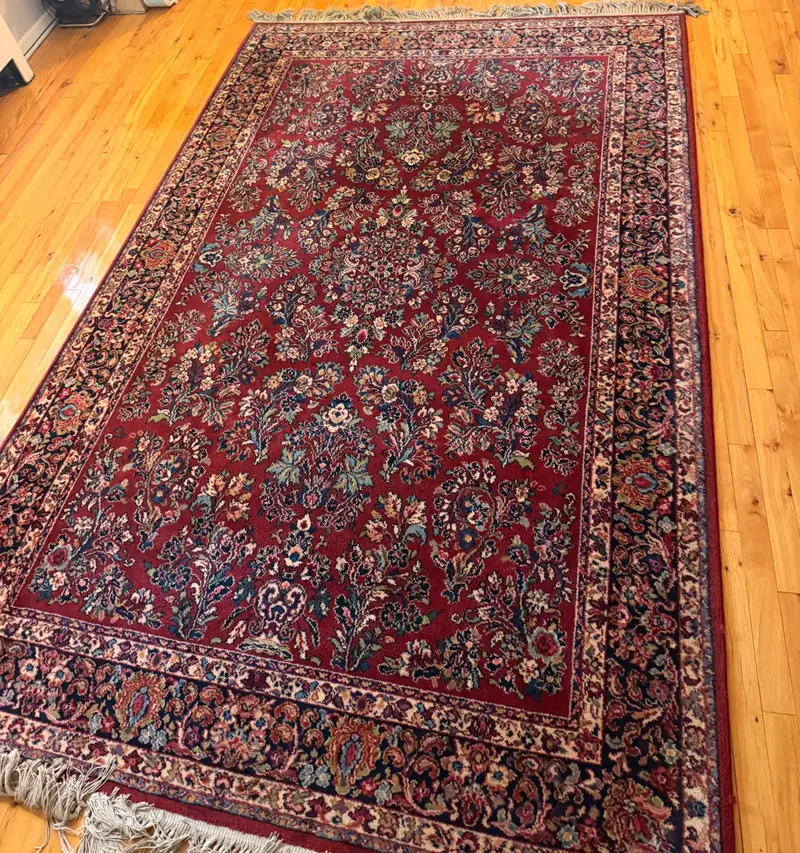 PHOTOGRAPHED BY OUR TEAM
Care begins with
understanding.
Persian rugs are among the world's most coveted textiles, each reflecting the tradition of its region, from the intricate florals of Isfahan to the bold geometry of Heriz. Our cleaning approach accounts for the specific knot density, dye type, and wool or silk composition of each Persian piece. We work to lift embedded soil and bring back color while preserving the rug's character.
We discuss the condition, recommended treatment and expected outcome with you. The appropriate method is selected after inspection; not every treatment is suitable for every rug.
Persian Rug Cleaning in SoHo
Persian rugs are named for the towns and regions they were woven in, and the region decides the wash, because a city rug and a village rug are built differently even when they look alike at a glance. A Senneh is finely knotted and thin, with a high knot count that lets a weaver draw fine curves in the pattern; a Gabbeh is a thicker village pile that holds water and dries slowly, so it is heavy when wet and needs air moving around it while it dries. A Bidjar is packed so tightly that it stands stiff, and folding one can crack the foundation, so it travels rolled and never bent. The wash follows the weave: knot density and fiber are recorded first, the dyes are stabilized where they need it, and the piece goes into a full immersion hand-wash only after the tests say the colors can take it. Rinsing runs in stages until the water comes away clean, because detergent left in dense pile keeps attracting soil and the rug would dull again within months. Drying is flat, with moving air over the pile, and the fringe gets its own wash and a hand finish at the end. The dyes themselves are worth a word: many Persian rugs are colored with natural dyestuffs, madder giving the reds and indigo the blues, and each shade takes its own depth in the wool, which is why the colors of an old rug sit at slightly different heights. Cleaning clears the soil from those colors; it does not deepen them past where the dye remains. On the way out of the building, size decides the plan. The 1,133 residential buildings here run from tenement walk-ups to former print works and loft buildings with freight cars, and a thick Gabbeh rolls into a bundle that may not turn on a tight tenement landing, so give us both dimensions and the floor when you book, and say whether the rug comes down by hand or goes by freight car.
- 48%of homes in walk-ups
- 79%built before 1940
- 6floors in the median home's building
A careful
consideration.
- 01Region-specific cleaning protocols
- 02Natural dye stabilization
- 03Full immersion hand-wash
- 04Multi-stage rinsing
- 05Flat drying with air circulation
- 06Hand-finished fringe cleaning
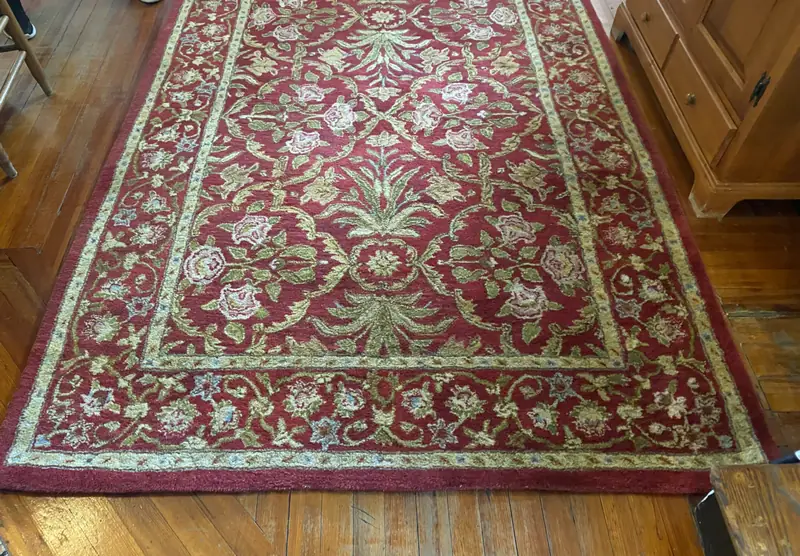
Time for a closer look?
- Color fading from sun exposure
- Deep-set soil in dense pile
- Fringe discoloration
- Food or beverage stains
- Pet-related damage
- Dust mite accumulation
Let's care for
something remarkable.
A favorite piece. A family heirloom.
A room that feels like you again.