
Oriental Rug Cleaning
in the West Village
Specialized hand-cleaning for Persian, Turkish, Moroccan, Afghan, and all handwoven oriental rugs.
Arrange a pickup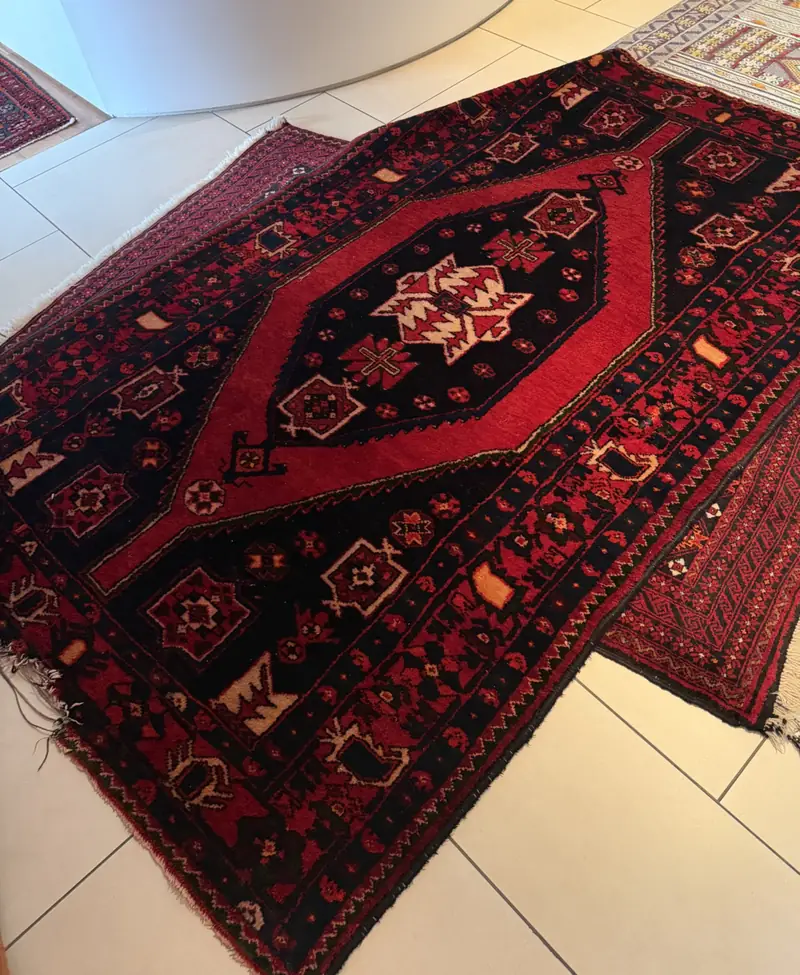 PHOTOGRAPHED BY OUR TEAM
Care begins with
understanding.
Oriental rugs represent centuries of artisan tradition. Our specialists understand the unique construction, dye chemistry, and fiber composition of each origin, from Tabriz and Isfahan to Oushak and Beni Ourain. Every oriental rug we receive is assessed individually and cleaned using methods calibrated to its specific weave, age, and condition. We remove embedded soil, restore vibrancy, and preserve the integrity that makes each piece irreplaceable.
We discuss the condition, recommended treatment and expected outcome with you. The appropriate method is selected after inspection; not every treatment is suitable for every rug.
Oriental Rug Cleaning in the West Village
Dark brown and black wool in an older Oriental rug often stands lower than the colors around it. The iron-based dyes once used for those shades slowly eat the wool, so outlines and small details wear down first; it is a sign of age, and washing does not reverse it. Corroded areas are fragile, and we point them out when we look the rug over before cleaning. With 42 percent of West Village homes in walk-ups or houses, many rugs here lie in rooms a century old; if your Oriental is that old too, run a hand over the dark areas before pickup, and if they feel brittle or have small holes, mention it on the tag. The median home here sits in a building from 1910, and a rug can easily be older than the room it lies in, which is one more reason the assessment comes first. It covers the fiber, the dyes, the foundation and repairs done before, and you hear what the work involves before anything is begun. An old oriental piece is hand-knotted, so its ends are warp yarn running out, and years of shortening leave the knots close to the edge, where they are watched closely in the wash. The cleaning is a full immersion hand-wash whose solution is matched to the fiber, after a test of color stability on a corner kept from view, because an old palette can hold a shade that lifts. The rinse moves from stage to stage until the water clears, since residue left behind draws in new soil and takes the edge off the colors. Drying is done flat, with air drawn over the pile, and when it is dry the pile is groomed to follow the knot direction, and the fringe is combed out by hand afterward. The wash changes the soil most of all: grit worked into the pile across years of shoes is lifted away, and the colors come through deeper for it, while the worn dark outlines stay worn, because corrosion has thinned the wool and no cleaning returns fiber. If chairs have scraped a track across the field, tell us where the table stood, so the grooming brings that track back into line.
- 39%of homes in walk-ups
- 76%built before 1940
- 6floors in the median home's building
A careful
consideration.
- 01Full immersion hand-washing
- 02pH-balanced fiber-specific solutions
- 03Color stabilization testing
- 04Controlled low-temperature drying
- 05Hand-groomed pile finishing
- 06Fringe detailing
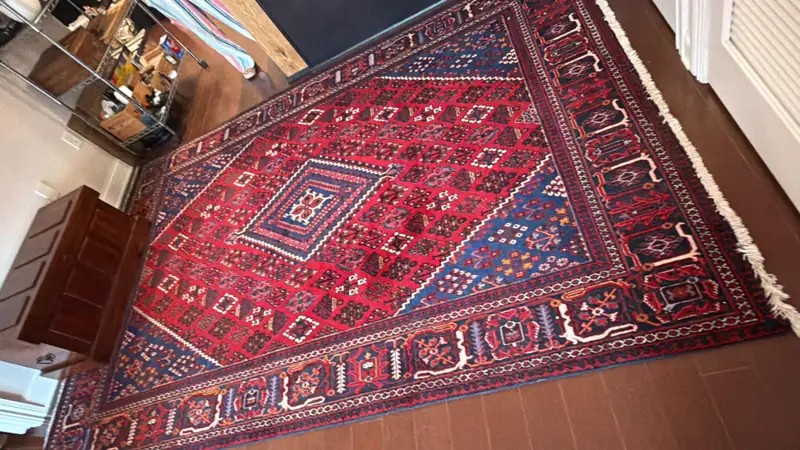
Time for a closer look?
- Fading or dull colors
- Embedded dirt and grit
- Musty or stale odor
- Pet stains and discoloration
- Fringe yellowing
- Moth or insect damage residue
Let's care for
something remarkable.
A favorite piece. A family heirloom.
A room that feels like you again.